





Corresponding author’s email: vefgueye@gmail.com orcid.org/0000-0002-4537-4394 Paper presented at the 1st World Native Poultry Conference, 12 March 2025, Bangkok, Thailand
SUMMARY
Native/indigenous poultry (NP), which make up more than 80% of the world’s birds, are usually kept in small numbers ranging from as few as one up to about 20 birds/flock, and are critically important in low- and lower middle-income countries (LLMICs) of Africa, Asia, Latin America and the Pacific, contributing about US$ 289 billion of NP meat gross production value globally. The NP value chain plays a key role in food and nutrition security, income generation, livelihoods and conservation of native breeds. The growing demand for poultry products in LLMICs, driven by population growth, higher incomes, scarcity of land and urbanization, represent a huge opportunity for hundreds of millions of smallholder poultry farmers, processors and marketers, many of whom are women, to meet that market demand and rise out of poverty. Improving the efficiency of NP production in LLMICs, especially the productivity per bird, can triple poultry-related income. However, NP birds are facing many constraints, including high mortality (mainly due to Newcastle Disease and other avian diseases). Significant improvements in NP value chain can be achieved through well-designed and implemented research and development programmes that endow NP actors with necessary knowledge and skills. In addition to the need for substantial improvement in human and institutional capacity building, planners and policy makers must be sensitized about the potential of NP as a tool in poverty reduction, food security and gender equity strategies. The paper explores contributions of NP to food security, wealth creation and sustainable livelihoods under resource-limited conditions. Moreover, it calls for policies and strategies for the sustainable preservation and conservation of NP breeds in order to avoid extinction. Keywords: Indigenous poultry, native poultry, food security, wealth creation, sustainable livelihoods. Disclaimer: The views expressed in this publication are those of the author and do not necessarily reflect the views of the Food and Agriculture Organization of the United Nations.INTRODUCTION
The growth of the world human population, which is expected to increase from 8,127 million in 2024 to 9,796 million in the year 2054 (United Nations, 2025), will take place largely in low- and lower middle-income countries (LLMICs) of Africa, Central Asia, Eastern Asia, Southern Asia, South-eastern Asia, Central America, South America, Caribbean, Eastern Europe, Southern Europe, and Oceania. According to the World Bank (2025), LLMICs are nations that have a per capita gross national income (GNI) of less than US$ 1,146 or between US$ 1,146 and US$ 4,515 in 2023. In 2024, 132 nations were classified as LLMICs (53 in Africa, 36 in Asia, 11 in Europe, 24 in Latin America and the Caribbean, and 8 in Oceania). Most of the 638 to 720 million people, corresponding to 7.8 and 8.8 percent of the global population, respectively, still suffering from hunger in 2024, live in LLMICs, especially in the arid zones of Africa (about 307 million people; 20.2% of the population), Asia (323 million; 6.7% of the population) and in Latin America and the Caribbean (34 million; 5.1% of the population) (FAO et al., 2025). Poultry products represent one effective way to feed the fast-growing human population. According to the United Nations Food and Agriculture Organization (FAO) data (FAOSTAT, 2025), the total poultry population in the world (chickens, ducks, geese, turkeys and other poultry birds) was about 29.2 billion heads in 2023, with the largest share being chickens (about 93.4 %). From 1993 to 2023, the number of chickens has more than doubled (2.6-fold increase) in Africa, (2.5-fold increase) in South America, (2.3-fold increase) worldwide, (2.2-fold increase) in Central America; more than tripled (3.1-fold increase) in the Caribbean; more than quadrupled (4.1-fold increase) in South-eastern Asia; and more than quintupled (5.3-fold increase) in Southern Asia (FAOSTAT, 2025). However, according to Branckaert and Guèye (2000), Tabler et al. (2021) and Guèye (2022, 2024), most of the conditions required by the intensive poultry sub-sector are not met in LLMICs, namely (i) the ability to purchase most inputs, i.e. improved birds, feeds, vaccines, drugs and equipment; (ii) the availability of a highly skilled manpower; (iii) the presence of a strict disease control; and (iv) the existence of national domestic markets able to absorb poultry products at attractive prices by consumers with adequate purchasing power. In fact, prior to developing medium to large-scale poultry units, either for broiler or egg production, it is important to achieve either self-sufficiency in cereal products or to generate the required hard currencies provided by the export of expensive raw materials, or to have a developed services sector. Poultry mainly reared in large scale and intensive operations make them one of the fastest growing agricultural sub-sectors.DOMESTICATION OF POULTRY SPECIES
Poultry and people share history for thousands of years and current trends suggest that this is not about to change in the near future (Alders and Pym, 2009; Alders et al., 2021). ‘Native chickens’ (NCs) (Gallus gallus domesticus) (Photo 1), the world’s mostly reared poultry bird species, also known as indigenous or local or village chickens, have been raised since their domestication back around 7,000-10,000 years ago in Southeast Asia and Oceana (Laatsch, 2025a), around 8,000 years ago from Southeast Asia (Alders and Pym 2009, Hata et al., 2021), about 3,500-5,000 years ago from South-East Asia (Tixier-Boichard, 2025). The Red Jungle Fowl (Gallus bankiva) is the wild ancestor of the domestic chicken (Photo 2). Peters et al. (2022) reported that the first unambiguous domestic chicken bones were found at Neolithic Ban Non Wat in Central Thailand dated to ~1,650 to 1,250 Before Common Era (BCE), and that chickens were not domesticated in the Indian Subcontinent. Chickens did not arrive in Central China, South Asia, or Mesopotamia until the late second millennium BCE, and in Ethiopia and Mediterranean Europe by ~800 BCE, in East Asia dated to the late Shang Dynasty, which spanned ~1,350 to 1,046 BCE, in Japan and the Korean Peninsula dated to the Middle Yayoi ~100 BCE to 100 Common Era (CE), in Oceania dated to ~1,200 CE, in Southwest Asia dated to ~1,200 BCE, in Northeast Africa dated to 1,479-1,425 BCE, in northern Ethiopia dated to ~800-600 BCE, in the Comoro Islands and Madagascar dated to ~750-900 CE, in North and West Africa dated to 5th century BCE, and in central Europe dated to only 137-327 CE.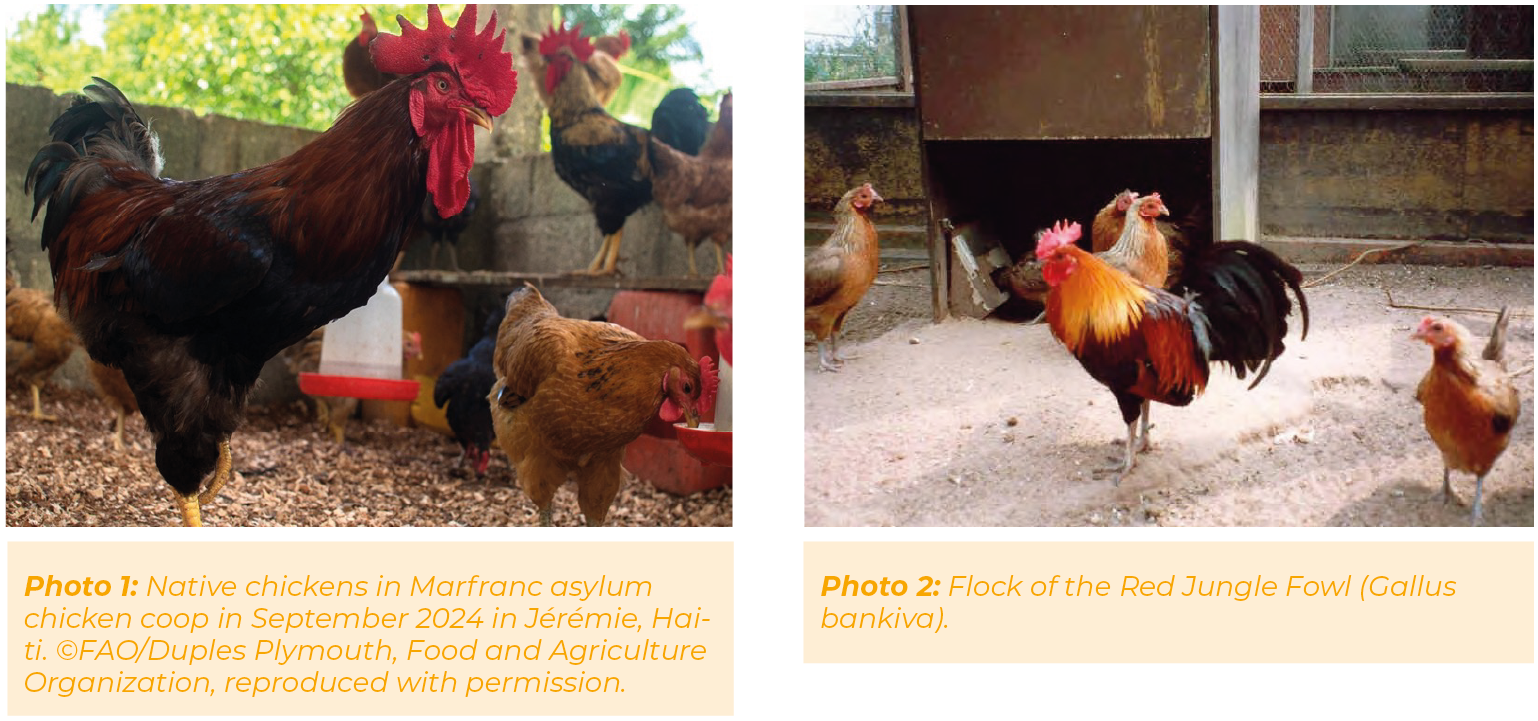
GEESE
‘Native geese’ (NGs), which descend from two wild species, the Greylag goose (Anser anser) (Photo 8), and the Swan goose (Anser cygnoides) (Mannermaa, 2014), were first domesticated at least 7,000 years ago in an ancient rice cultivation village in Tianluoshan, China (Eda et al., 2022). The domestication of Chinese geese occurred ~3,499 years ago and that of the European geese occurred ~7,552 years ago (Photo 9). Moreover, gene flow was observed between domestic geese and their wild ancestors. Analysis of introgression showed that Yili geese had been introgressed by Chinese domestic geese, and the body size of Yili geese may be influenced by introgression events of some growth-related genes, including IGF-1. The European domestic geese are generally accepted to originate from greylag geese, and Chinese domestic geese have two origins, most of which originated from swan geese, and the Yili goose originated from greylag geese (Qu and Wen, 2022; Wen et al., 2023). Geese are usually kept in small backyard flocks and are reproduced by natural mating systems (Photo 10 and 11). Intensive goose production in large flocks exists in various European countries and in Asia.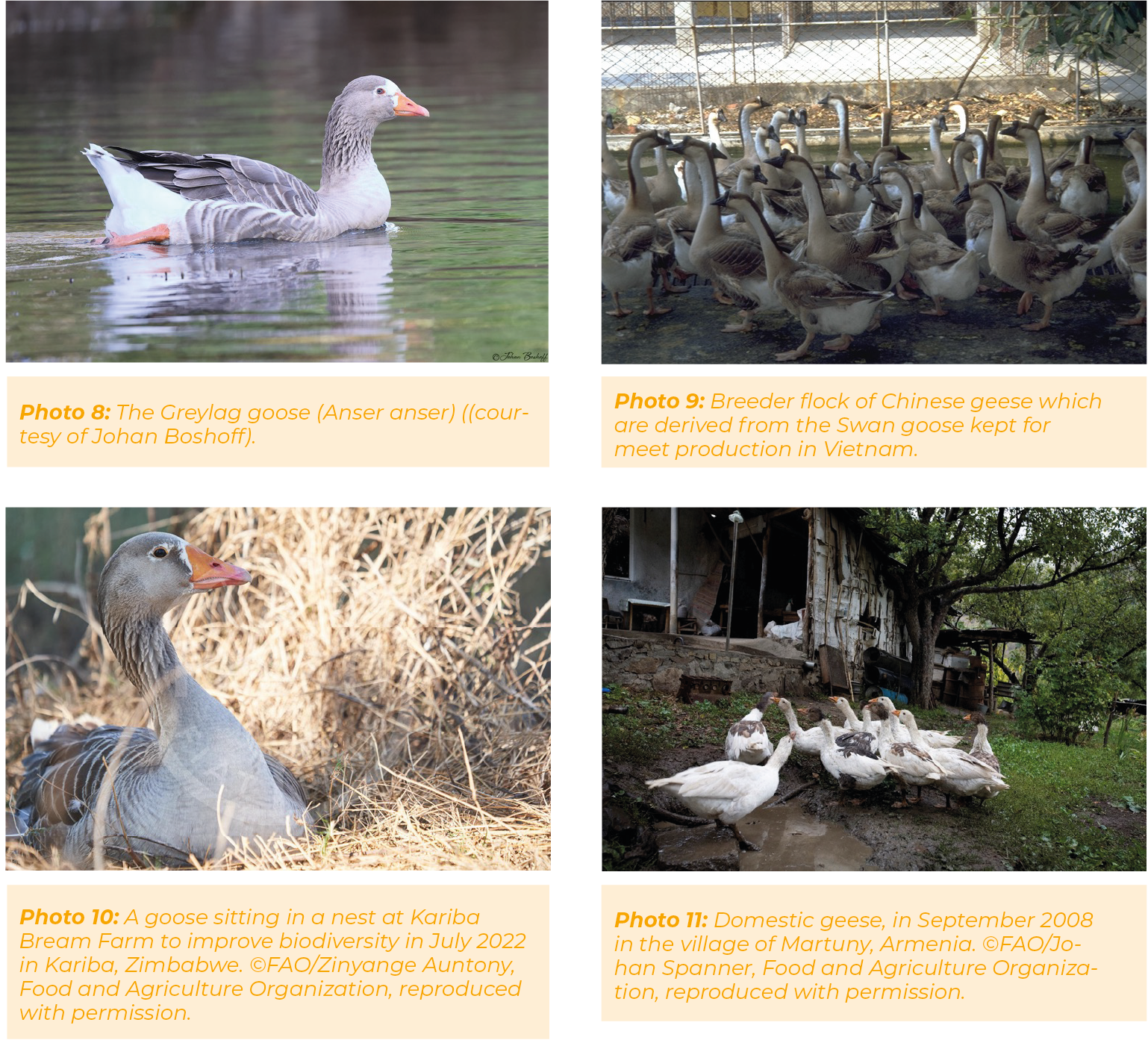
TURKEYS
‘Native turkeys’ (NTs), which descend from the Wild Turkey (Meleagris gallopavo, the North American turkey) (Photos 12 and 13), were domesticated more than 2,000 years ago (Stein, 2019; Smith, 2024), about 15,000-11,000 years ago in the North and Central America (Salgado Pardo et al., 2022). The other living species is M. ocellata, the ocellated turkey (Speller, 2014; McKenzee, 2018). Seven subspecies of wild turkeys were already described long time before settlers reached America for the first time. Among them, the Mexican subspecies (M. g. gallopavo) has been addressed to be the most presumable founder of current domestic turkeys, without discarding the contributions of other subspecies. Furthermore, according to Salgado Pardo et al., (2022) and Speller (2014), two likely origins are determined. On the one hand, Mesoamerica (±700 BCE – 400 AD), which is the most widely accepted. On the other hand, the South-West of the United States (±300 BCE), as a direct consequence of agricultural features’ migration. Conquistadors from Spain took these early domesticated turkeys back to Europe in the 1400s (McKenzee, 2018; Smith, 2024) and expanded them across Europe in the early 16th century (Salgado Pardo et al., 2022), bred them with local birds, and then brought those descendants back to the Americas in the 1600s, forever changing the genetic makeup of the North American turkey.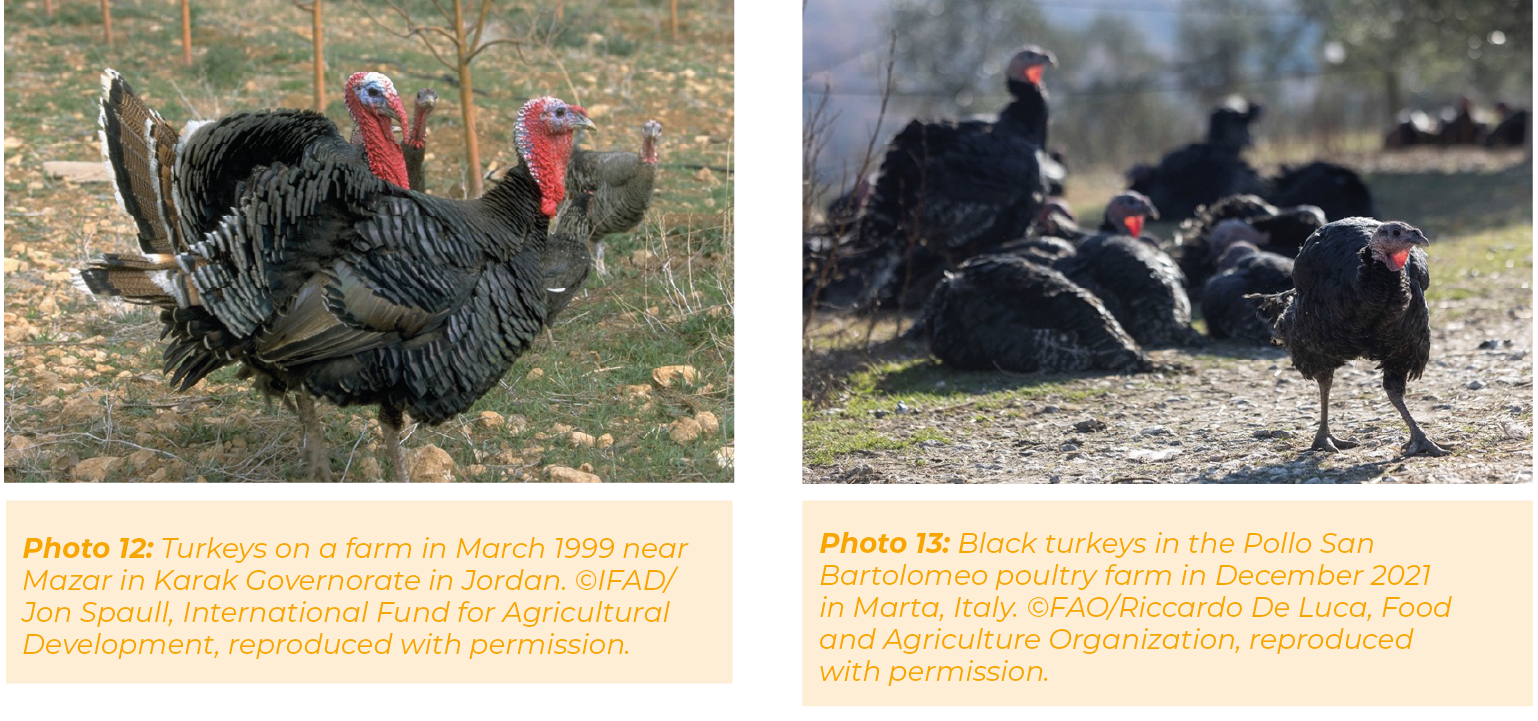
GUINEA FOWL
Domestic ‘native Guinea fowl’ (NGF), also named ‘pintade’, ‘pearl hen’ or ‘gleany’, was first domesticated as the helmeted NGF (Numida meleagris) (Photo 13) about 50 BCE in Mali and Sudan and in Guinea Coast of west Africa ( Larson and Fuller, 2024). (Photo 14). NGF are still found in the wild in Africa or the adjacent Island of Madagascar. They are kept under family and traditional rearing systems, mainly for food security and wealth creation (Larson and Fuller, 2014; Houndonougbo et al., 2017; Abdul-Rahman et al., 2019; Soara et al., 2020), but this species plays also a major socio-cultural role in specific ceremonies (Brophy, 2022). Their natural ranges include large parts of sub‐Saharan Africa, from Senegal to Eritrea and from Chad to South Africa, where eight subspecies have been identified (Vignal et al., 2019) (Photos 15 and 16). NGF were first introduced to Europe in the 15th century and came to the Americas with the early settlers (Lehr, 2024). NGF were mainly used in ancient Rome and Greece as birds for sacrifice. Later, they left the altars for Greek and Roman tables and began to be raised in farmyards. Their trace was lost in Europe during the Dark Ages, reappearing in the late Middle Ages (1,300 – 1,500 CE). Moreover, N. meleagris var. galeata, commonly called the pearl gray helmeted NGF, is the most widespread variety in Africa (Houndonougbo et al., 2017). Furthermore, according to Armitage (2021), NGF were held in domestication by the ancient Egyptians from around 1,475 BC which spread to the Greeks in about 400 BC and later the Romans by CE 70.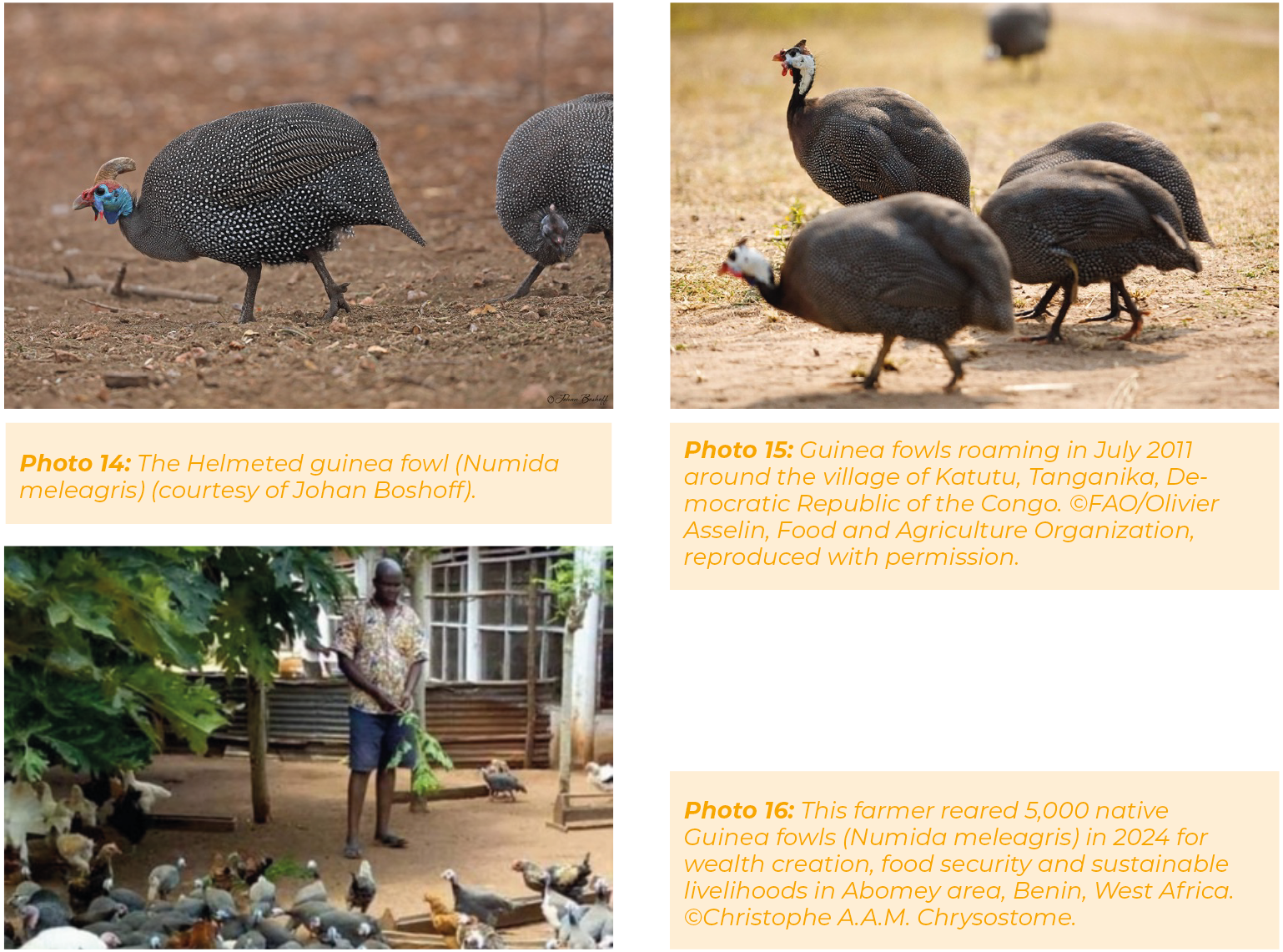
PIGEON
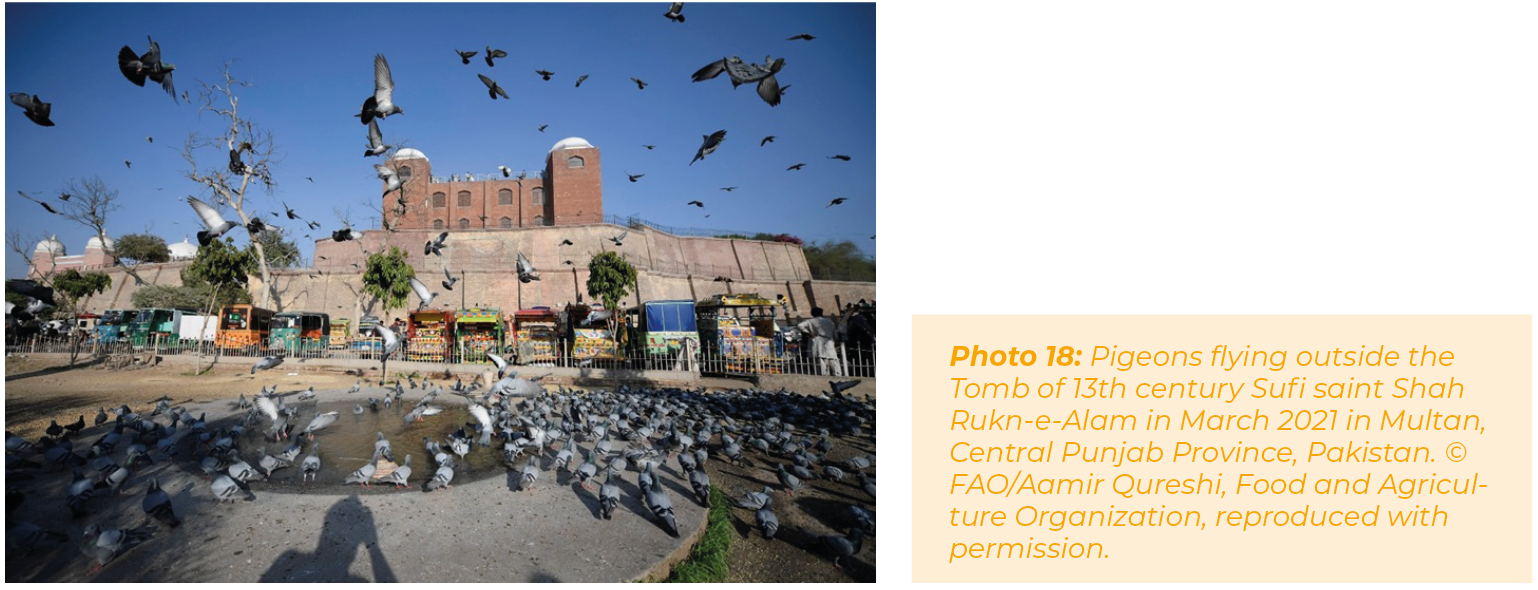
The domestic ‘native pigeon’ (NPg) (Columba livia domestica) (Photos 17 and 18), which is an Old World pigeon, is considered the world’s oldest domesticated bird (Jerolmack, 2007; Baptista et al., 2009; Shapiro et al., 2013; Gilbert and Shapiro, 2014; Smith et al., 2022; Aussie Animals, 2025). Mesopotamian cuneiform tablets mention the domestication of native pigeons (NPgs) more than 5,000 years ago in Middle East and North Africa (Aussie Animals, 2025), according to Egyptian hieroglyphics. Research suggests that domestication of NPgs from the rock pigeon (RoPg) was as early as 10,000 years ago (Blechman, 2007), mainly for food security, wealth creation, leisure and exhibition, religious purposes, and communication as messengers (Jerolmack, 2007; Baptista et al., 2009; Balog et al., 2024; Aussie Animals, 2025). The RoPgs evolved in Southern Asia, today the natural habitats of the wild RoPg are open and semi-open environments across Europe, North Africa, and Western Asia, with a preference for cliffs and rock ledges for breeding (Gilbert and Shapiro, 2014). The first records of distinct domestic NPg varieties were found in Palestine, on the roof of shrines to Astarte, dated more than 3,000 years ago (Price, 2002). According to Jerolmack (2007), the exact origins of the rock dove are unknown, but are usually traced to North Africa, parts of coastal Europe, the Indian subcontinent, and Central Asia. Also, evidence as found for the geographic origins of major breed groups in the Middle East and contributions from a racing breed to North American feral populations (Shapiro et al., 2013) and in India and the Middle East suggesting that racing breeds have made substantial contributions to feral pigeon populations (Stringham et al., 2012). Moreover, Jerolmack (2007) reported the oldest documented use of NPgs comes from areas in and around the Middle East and North Africa, and 12,000-year-old NPg bones found in caves in Israel that were kept in human dwellings indicate that ancient hunter- gatherers used wild pigeons as a food source. Furthermore, NPgs appear on Egyptian bas-reliefs from at least 2,700 BC. From Homer (~9th century BCE) to Socrates (469-400 BCE) to Aristotle (384-322 BCE), the Greeks displayed knowledge of the NPg’s habits and abilities and wrote about issues of selective breeding and domestication. Roman records from as far back as 200 BCE document force-feeding of NPgs for fattening. According to Vuorisalo et al. (2001), the oldest certain evidence for domestic NPgs (Columba livia) in Finland dated back to 1557, when NPgs were kept at the Iso-Heikkilä royal estate near Turku. Balog et al. (2024) reported that giant domestic NPgs may have been present in the Carpathian Basin, stretching over the area of Austria, Czech Republic, Poland, Slovakia, southeastern Poland, eastern Slovakia, Ukraine, Romania, Romania and eastern Serbia, for a considerable period and were not introduced only in the last 100 or 200 years. Bigi et al. (2016) reported that the Italian Beauty Homer derived from the Race Homer, and the two breeds of domestic NPg, despite 100 years of separate selection, show a very similar genetic composition. Furthermore, Pennisi (2013) reported that, for centuries, fanciers of NPg have cultivated a startling variety of colours, feather arrangements, and behaviours, creating more than 350 breeds used in shows for looks and competitions for how fast they fly, how much they tumble in the sky, or how long they can remain airborne.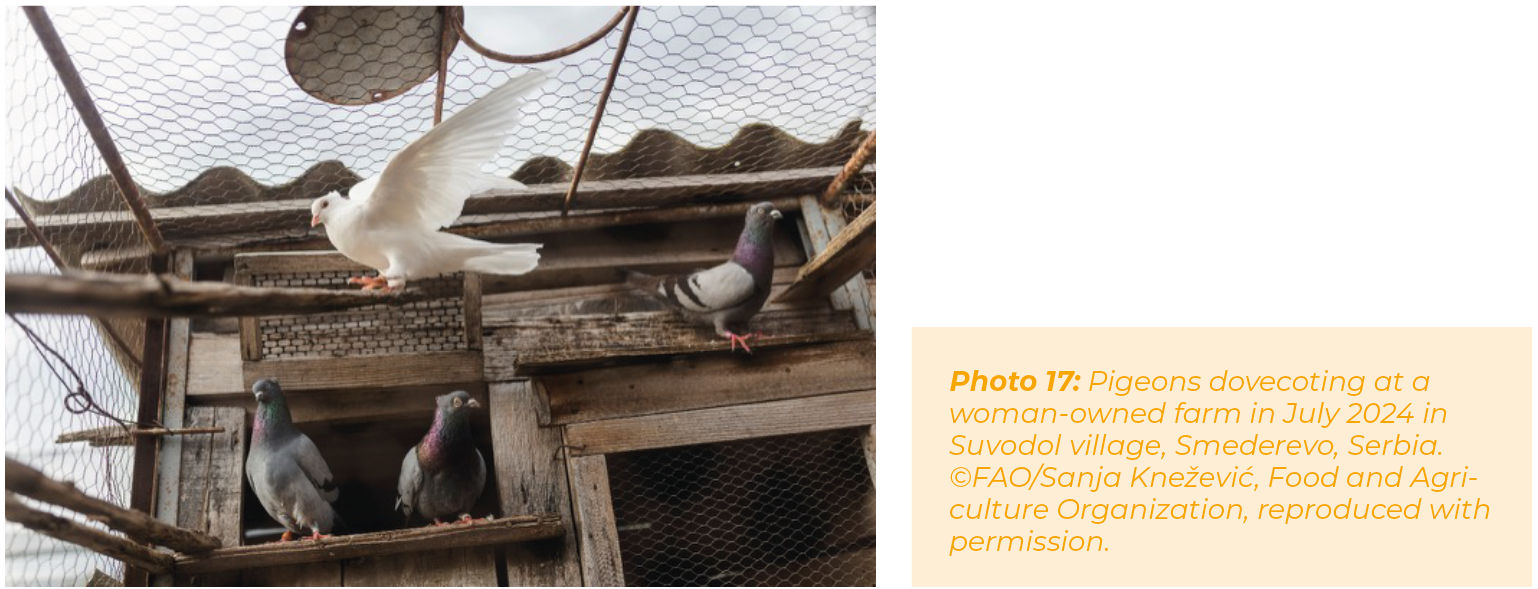
THE ROLE OF NP PRODUCTION IN THE SOCIETIES OF LLMICs
Native/indigenous poultry (NP), which comprise small-scale extensive to semi-intensified poultry production systems, are still very important in LLMICs of Africa, Asia, South and Central Americas, Caribbean and Oceania (Guèye, 1998, 2012, 2022, 2024; Figueiredo, 2012; Padhi, 2016; Dorji et al., 2017; Alders et al., 2018, 2022; Di Pillo et al., 2019; Snively-Martinez and Quinlan, 2019; Ismoyowati and Setianto, 2021; Mujyambere et al., 2022; Asencio et al., 2023). As the challenges and opportunities for small-scale NP production are reviewed, it is crucial to bear in mind that poultry are frequently an essential part of human societies, especially in LLMICs. While making one of the best uses of available natural resources, NP constitute an important component of the agricultural and household economy in LLMICs that goes beyond direct food production for the fast- growing human population as well as employment and income generation for resource-poor small farmers, especially women. They also serve as a means of capital accumulation and as a barter product in societies where there is no circulation of currency. Furthermore, they are closely linked to the religious and socio-cultural lives of several million resource-poor farmers for whom poultry ownership ensures varying degrees of sustainable farming and economic stability by minimizing risks and strengthening the cohesion within traditional communities. Despite its significant contribution to poverty alleviation, food security and the well-being of the human population, especially in disabled and disadvantaged groups in less-favoured areas of LLMICs, NP do not receive due attention from many agricultural policy makers (including livestock specialists). Small-scale NP farming is not yet regarded by many researchers, development and extension workers as an area of importance in terms of political aspects and scientific prestige.PRODUCTIVITY ID NP UNDER DIFFERENT PRODUCTION SYSTEMS
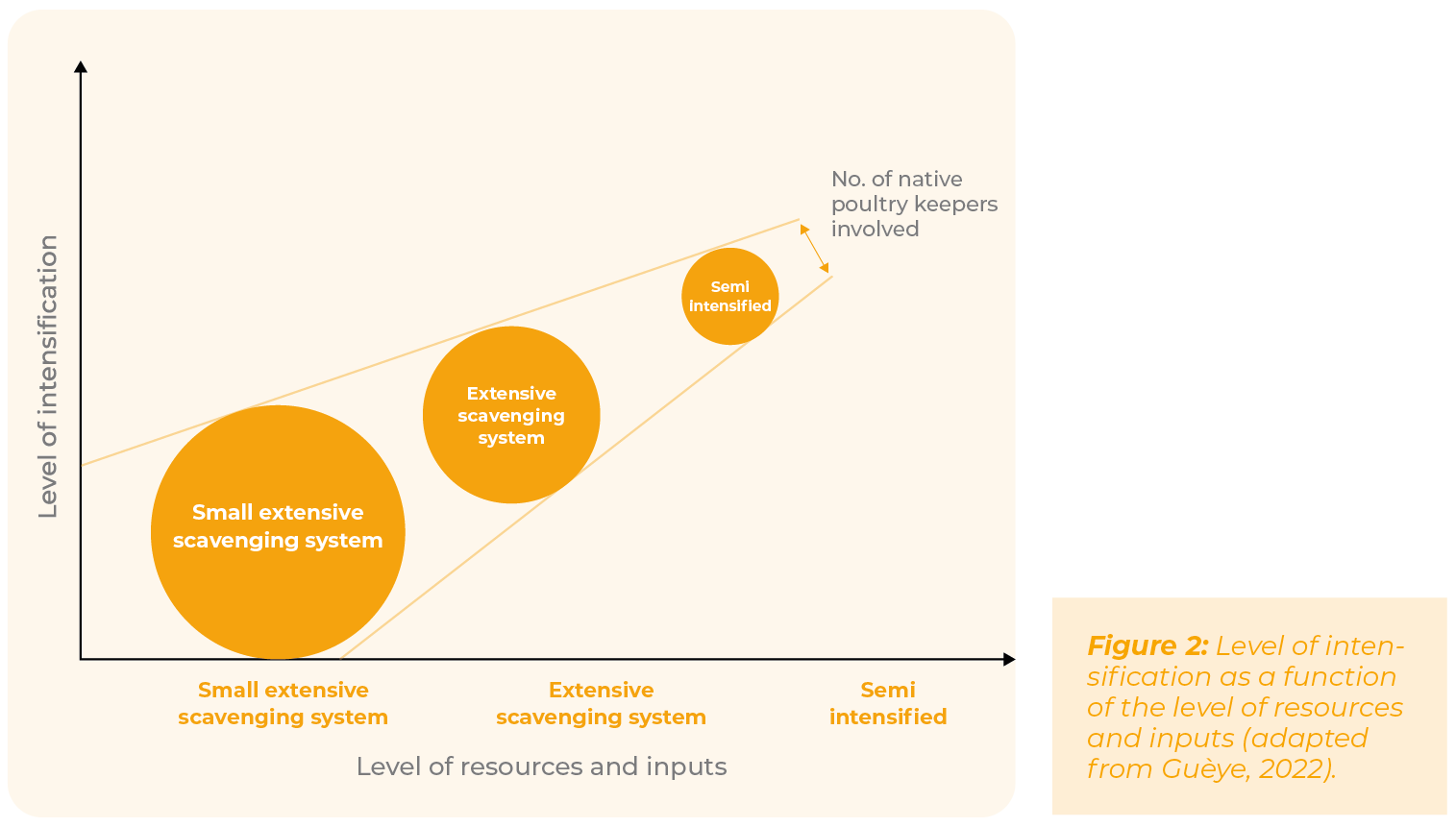
Typically, three NP production systems can be distinguished in LLMICs (Branckaert and Guèye, 2000; FAO, 2004; Besbes et al. 2012; Thieme et al., 2014; Alders et al., 2018; Guèye 2012, 2022, 2024, 2025; Chaiban et al., 2020; Jim, 2021; FAO and IFAD, 2022), namely (1) the small extensive scavenging system: flock size of 1-5 adult birds of 100% NP breed, scavenging, no regular water or feed, little or poor night shelter; (2) the extensive scavenging system: flock size of 5-50 adult birds of ≥70% NP + ≤30% of crossbred breeds to 100% NP breed (author’s estimates), regular water, supplementary feeding, improved shelter, care of chicks in the first weeks, vaccination against Newcastle Disease and other diseases (e.g. fowl pox, fowl cholera, Gumboro disease, coccidiosis), when necessary, and treatment for parasites; and (3) the semi- intensified system: flock size of 50- 200 adult birds of ≤30% NP + ≥70% of crossbred breeds to 100% crossbred breed (author’s estimates), as in (2) above, with suboptimal balanced diets and further improvements in overall husbandry conditions. NP birds are kept in all these systems are encountered. The choice of system is largely determined by the availability of resources and inputs, i.e. housing, cages, feed, drugs and time/attention (Guèye, 2002, 2003a; FAO, 2004). Figure 1 illustrates the effect of the level of intensification on the productivity of NCs and crossbreeds. Depending on the intensification level, ‘pure’ NP birds are raised from small extensive scavenging system to semi-intensified systems. It is estimated that 50% and 30% of the total poultry stocks being kept in extensive scavenging and semi- intensified systems, respectively (Guèye, 2024).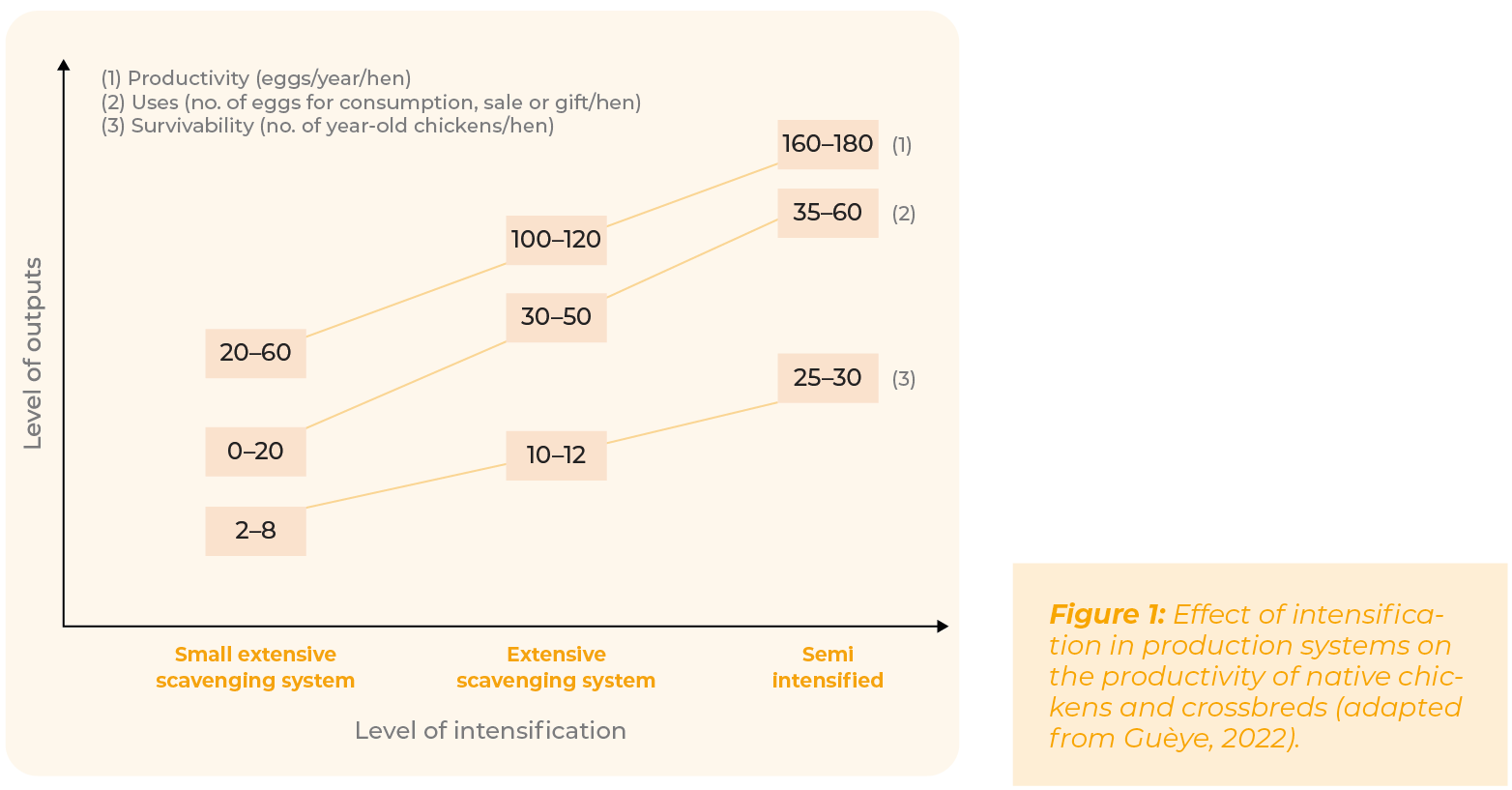
NP AS RESTART OF LIVESTOCK PRODUCTION AFTER DISASTROUS EVENTS
In LLMICs, keeping NP is in many cases considered as the first step in animal-rearing activities, especially after events such as climatic disasters (e.g. droughts, cyclones, hurricanes and floods), civil wars, political and economic instabilities lead often to drastic decrease in numbers of livestock (i.e. goats and cattle). This was, for example, the case in Mozambique, after as a long-lasting war and drought. For example, selling 4-5 chickens enabled rural women in Mozambique to get access to a goat (Bagnol, 2001; Guèye, 2022). Furthermore, keeping poultry for smallholder farmers represents a household savings, investment and insurance as the value of the birds increases over time. Under extensive scavenging management systems, most eggs from various NP species are allowed to incubate under the mothers-poultry, because NP-keeping farmers in LLMICs are aware of high mortality, especially in growing birds under resource-limited conditions. Keeping even a small flock is their major concern partly because of the social, economic, cultural and religious importance of poultry. Mortality rates in chickens are estimated at 53% up to four weeks of age in sub-Saharan Africa, 35-40% over the whole rearing period in Bangladesh and 40% in chicks in Western India (Guèye, 2003a).Conclusions Part I
Despite efforts to develop the intensive poultry sub-sector, NP farming is still a very important source of food supply in rural areas in Africa, Asia, South America and some European countries. There exists a great variability of domesticated species of Native Poultry, which are kept in small backyard flocks. Though the main rational of keeping NP is food for home consumption, meat and eggs of local breeds fetch high prices at local markets and are therefore a valuable source of income, mainly for women.
