





Dr. E. Fallou Guèye
Vice-President, World’s Poultry Science Association (WPSA) & President, African Poultry Network of the WPSA (WPSA-APN), Dakar, Senegal.
Disclaimer: The views expressed in this publication are those of the author and do not necessarily reflect the views of the Food and Agriculture Organization of the United Nations. orcid.org/0000-0002-4537-4394 Corresponding author’s email: efgueye@gmail.comSUMMARY
Part I of this publication described the main poultry species and rearing systems used by rural populations. This second part reports the current status and production value of local, small-scale poultry production worldwide. Reports from various regions (Africa, Central Asia, Eastern Asia, Southern Asia, South-eastern Asia, Central America, South America, Caribbean, Eastern Europe, Southern Europe, and Oceania) show that over 80 percent of families in rural areas of low- and lowest-income countries (LLMICs) raise poultry. The motivation for raising poultry is not limited to the production of eggs and meat for family consumption but also encompasses a wide range of other reasons, such as religious rituals, gifts for guests, entertainment and celebrations. Local breeds are therefore highly popular among the rural population, and their products achieve high prices. The status of production for various poultry species (chickens, ducks, geese, turkeys, pigeons, and other) in different regions of the world is presented for the period from 2020 to 2024. Furthermore, aspects of genetic improvement in local breeds and their importance for the conservation of genetic resources are highlighted.
Multiple roles and values of Native Poultry (NP)
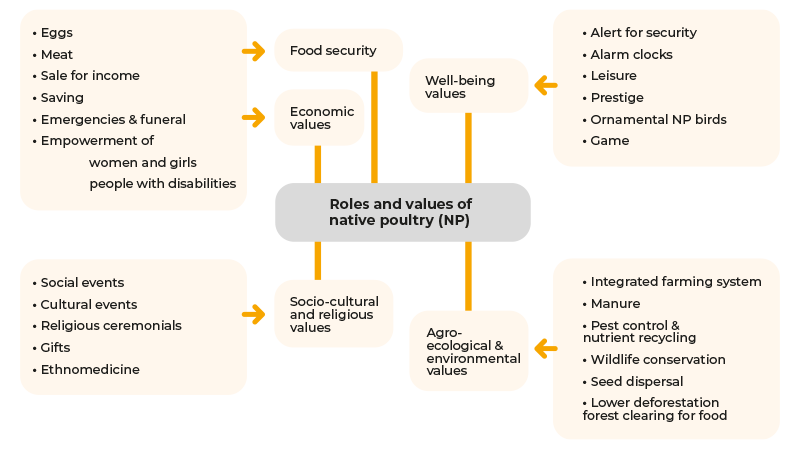
The keeping of NP by local communities has been practised for many generations in low- and lower middle-income countries (LLMICs). More than 85% of rural families in sub-Saharan Africa, more than 90% of tribal families from 35 surveyed villages in the five districts of western India, 92% of the 100 surveyed respondents in Madhya Pradesh in central India, 89% of the rural households in Bangladesh and 90–95% of the households in rural Cambodia keep one or more poultry species (Guèye 2005, 2022). All ethnic groups tend to be involved in NP production (Guèye, 2005; 2022), and birds are kept for many reasons (Table 1, Figure 1). NP keeping has a symbolic importance within the context of many social and cultural activities (e.g. special banquets for distinguished guests, gifts, cocks as alarm clocks for the villagers) and/or religious ceremonies (e.g. cocks as offerings to the deities). Furthermore, the major role played by women, assisted in some cases by children, in NP production in LLMICs is widely recognized (Branckaert and Guèye, 2000, Guèye 2003a, 2003b, 2005, FAO, 2004, de Bruyn et al., 2015; Alders et al., 2018, 2022). For example, more than 70% of chicken owners in rural areas of Sub-Saharan Africa are women, while traditionally NP belong only to children (boys) (Guèye, 2003a).Table 1. Purposes mentioned by farmers for keeping native poultry in various regions in low- and lower middle-income countries (LLMICs).
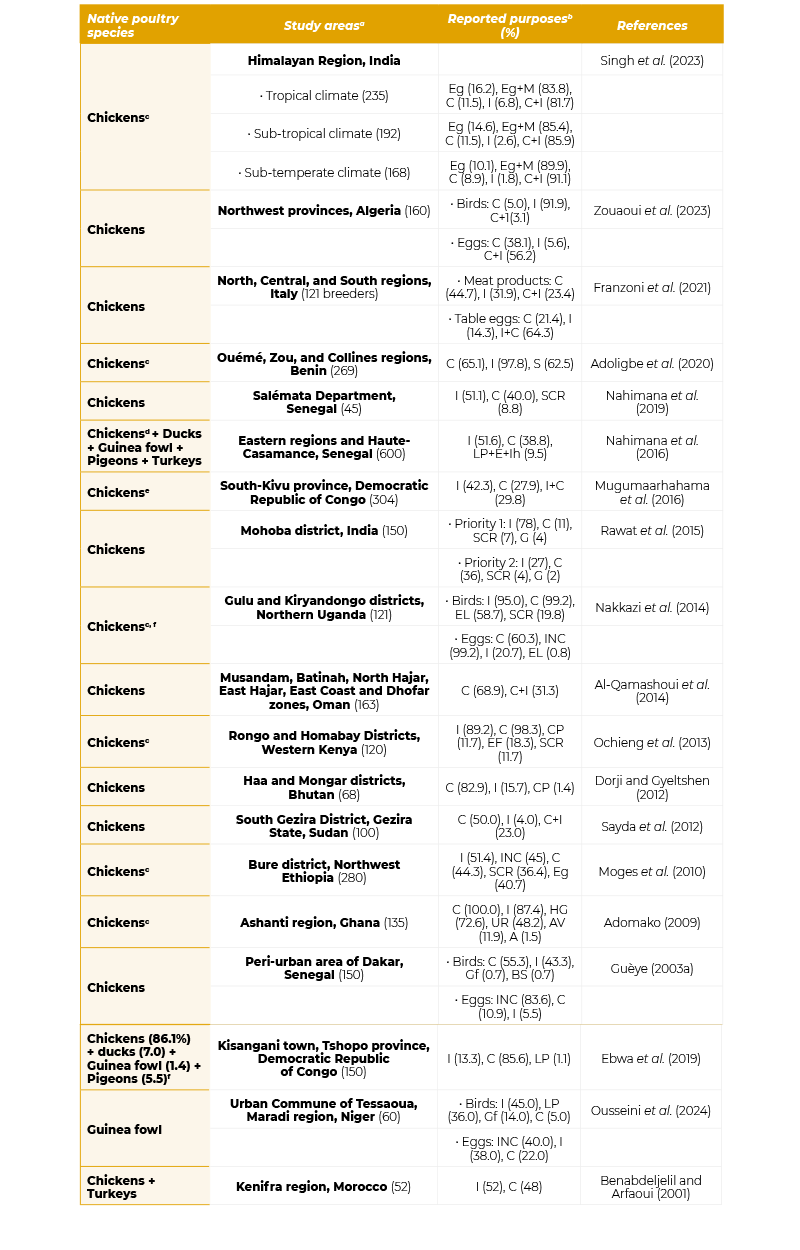
a Values in brackets are numbers of households surveyed.
b A=Alert for security, AV=Aesthetic value, BS=Breeding stock, C=Consumption, CP=Celebrations and/or parties, E=Exchange, EF=Emergencies and/or funerals, Eg=Eggs, EL=Exchange for labour, G=Game, Gf=Gifts, HG=Honouring distinguished guests, I=Income, Ih=Inheritance, INC=Incubation of eggs for replacement, LP=Leisure and/or prestige, M=Meat, S=Saving, SCR=Socio-cultural and/or religious ceremonies, UR=Use for rituals
c Non-exclusive percentages
d 84,7% of native chickens (NCs)
e 92.5% of NCs
f Calculated from the author’s data.
b A=Alert for security, AV=Aesthetic value, BS=Breeding stock, C=Consumption, CP=Celebrations and/or parties, E=Exchange, EF=Emergencies and/or funerals, Eg=Eggs, EL=Exchange for labour, G=Game, Gf=Gifts, HG=Honouring distinguished guests, I=Income, Ih=Inheritance, INC=Incubation of eggs for replacement, LP=Leisure and/or prestige, M=Meat, S=Saving, SCR=Socio-cultural and/or religious ceremonies, UR=Use for rituals
c Non-exclusive percentages
d 84,7% of native chickens (NCs)
e 92.5% of NCs
f Calculated from the author’s data.
Figure 1. Conceptual framework illustrating multiple roles and use values of native poultry in low- and lower middle-income countries (LLMICs).
NP as a tool for wealth creation
NP farming represents an important sector in animal production, with family flocks representing the vast majority, especially in LLMICs. In these countries, villagers raise NP to meet household food demands and as additional source of income. NP production can boost economic growth through direct contribution to rural sustainable livelihoods, food security and wealth creation, and, considering the sector’s various linkages with other industries, through the multiplier effects of poultry products along the value chains (FAO, 2018). NP rearing is profitable for farmers in resource-poor areas. From a study of 100 NC-keeping women farmers, who reared at least 10 NCs each one, in Sivasagar district, Assam, India, Islam et al. (2015) reported that the benefit-cost ratio (BCR) was 2.27. In a similar study of 150 NC-keeping households in Pabna district of Bangladesh, each one owning at least 8 birds reared under backyard conditions, Sumy et al. (2010) reported a BCR per bird 1.61. In LLMICs, it is estimated that BCR ranges from 1.50 to 3.25 in the farming of NP flocks, composed of chickens, ducks (mallard ducks and muscovy ducks), geese, pigeons, turkeys, and guinea fowl. In the Himalayan Region of India, Singh et al. (2023) reported the annual income from NC to be estimated at 5,140; 4,400 and 7,340 Indian Rupies in the tropical, sub-tropical and sub-temperate climates, respectively, which contributed to the total household’s incomes at 12.2, 10.5 and 18.0 % in the tropical, sub-tropical and sub-temperate climates, respectively.Meat and eggs from NP stocks are more esteemed by LLMICs’ consumers, in comparison with those from intensively raised poultry flocks. Consumers generally argue that products from NP are tastier and healthier (because synthetic drugs, such as antibiotics, are rarely used); therefore, they often fetch premium prices, more than 70-90%. For example, in Kampala city markets of Uganda, the cost of NCs was more than twice as much as imported chicken (Emuron et al., 2010). Because of its low productivity, NP in LLMICs has been undervalued and is frequently considered by farmers as an insignificant occupation compared to other agricultural or trade activities. As a result, it does not receive due attention from many agricultural policy makers (including livestock specialists). Nevertheless, NP birds and their products are a valuable asset to local populations because they are not only sources of wealth (Guèye, 2003a; Khan, 2008; Padhi, 2016; Nahimana et al., 2019; Snively-Martinez and Quinlan, 2019; Adoligbe et al., 2020; Singh et al., 2023; Zouaoui et al., 2023; Tenza et al., 2024) and food (Guèye, 2003a; Pym et al., 2006; Khan, 2008; Emuron et al., 2010; Wong et al., 2017; Alders et al., 2018, 2022; Abdul-Rahman et al., 2019; Nahimana et al., 2019; Snively-Martinez and Quinlan, 2019; Adoligbe et al., 2020; Mseleku et al., 2023; Singh et al., 2023; Tenza et al., 2024) but are also critical to strong socio-cultural linkages in LLMICs, especially in disadvantaged groups and resource-limited areas.
Current state and trends in gross NP meat production values (MPVs)
Global production of native chickens is showing an upward trend in all regions and sub-regions shown in Figure 2. East Asia holds a leading position in both production volume and growth rate. This is mainly attributable to the substantial output from Chinese production. Along with the USA and Brazil, China ranks among the world’s largest producers of poultry meat.Interestingly, despite the significant expansion of hybrid breeds under intensive poultry farming systems, the production of native breeds is also increasing disproportionately. The various varieties of the « Yellow Chicken » for instance, are enjoying growing popularity and have a substantial share of poultry meat consumption in China. Similar trends can be observed in native duck and goose production in EA countries. The world’s gross NP meat production value (MPV) was estimated in 2022 to be US$ 288,832 million, consisting of US$ 244,725 million (84.7%) for NCs, US$ 17,646 million (6,1%) for NDs, US$ 16,677 million (5.8%) for NGs, US$ 9,731 million (3.4%) for NTs and US$ 52 million (less than 1%) for native pigeons and other birds (NPgoBs).
Out of the total world’s gross NP MPV in 2022, Eastern Asia (EA) contributed 36.9%, South America (SAm) 14.1%, Southern Asia (SAs) 13.8%, South-eastern Asia (SeA) 11.2%, Eastern Europe (EE) 7.8%, Africa (Af) 6.9%, Central America (CAm) 4.4%, Southern Europe (SE) 3.0%, Oceania (Oc) 1.3%, Caribbean (Ca) 0.3% and Central Asia (CAs) 0.3% (FAOSTAT, 2025).
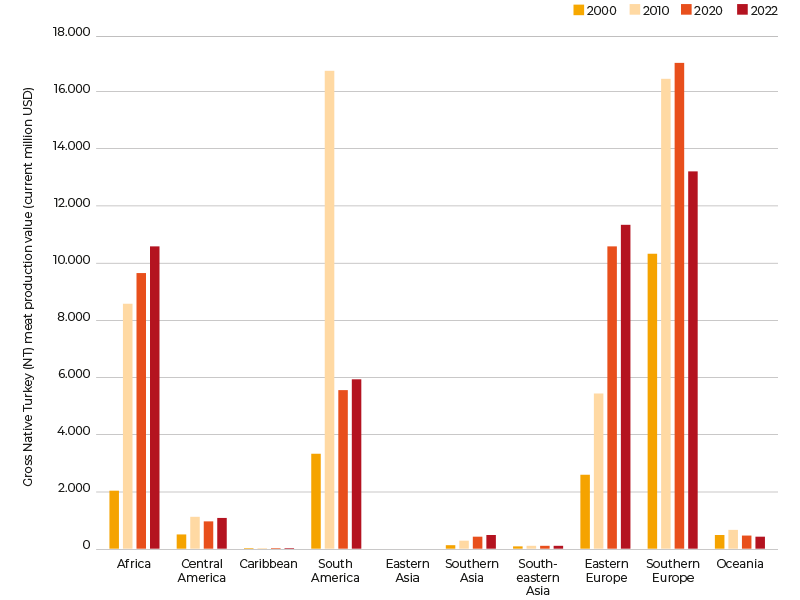
The world’s highest contributions to gross NP MPVs in 2022 were estimated at 20.4% for gross native chicken (NC) MPVs in EA (Figure 2), 85.4% for gross native ducks (ND) MPVs in EA (Figure 3), 98.0% for gross NG MPVs in EA (Figure 4), 6.8% for gross native turkeys (NT) MPVs in SE (Figure 5), and 99.0% for gross native pigeons and another birds (NPgoB) MPVs (FAOSTAT, 2025).
Figure 2. Gross Native Chicken (NC) meat production value (USD) in the world and by its regions and sub-regions from year 2000 to 2022 (data from FAOSTAT, 2025)
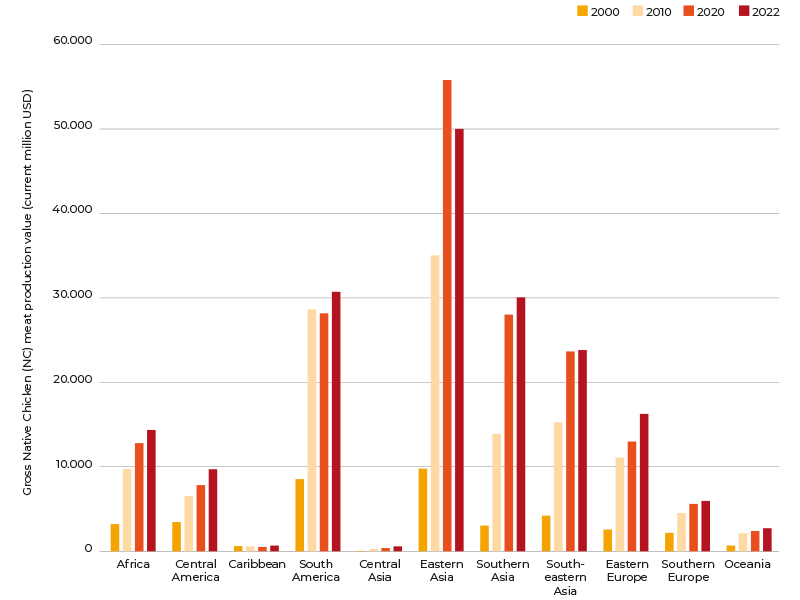
Figure 3. Gross Native Duck (ND) meat production value (USD) in the world and by its regions and sub-regions from year 2000 to 2022 (data from FAOSTAT, 2025)
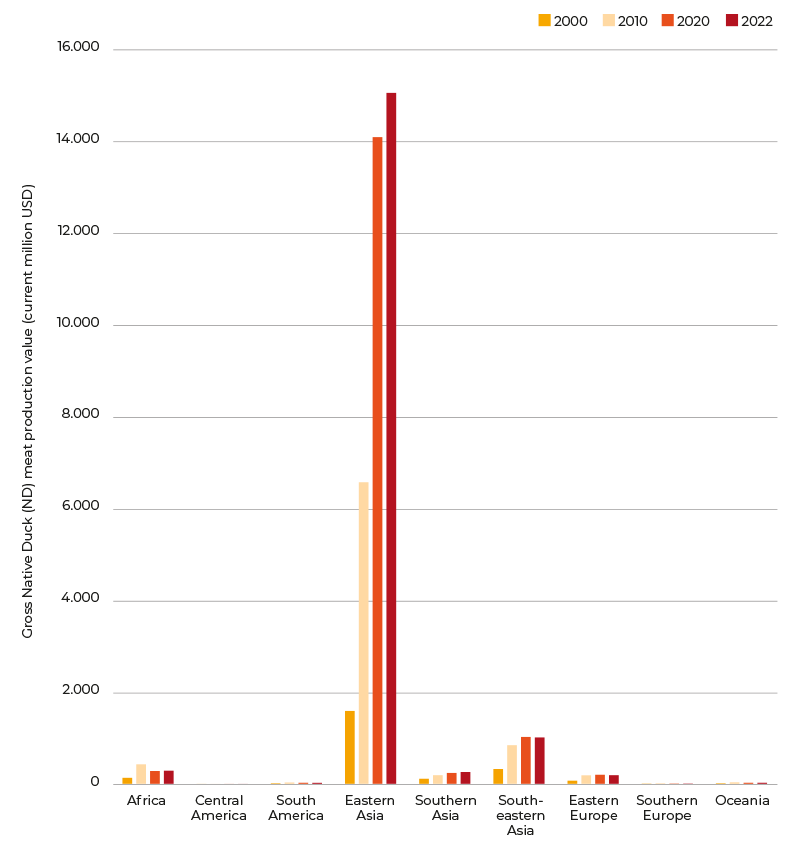
Figure 4. Gross Native Goose (NG) meat production value (USD) in the world and by its regions and sub-regions from year 2000 to 2022 (data from FAOSTAT, 2025)
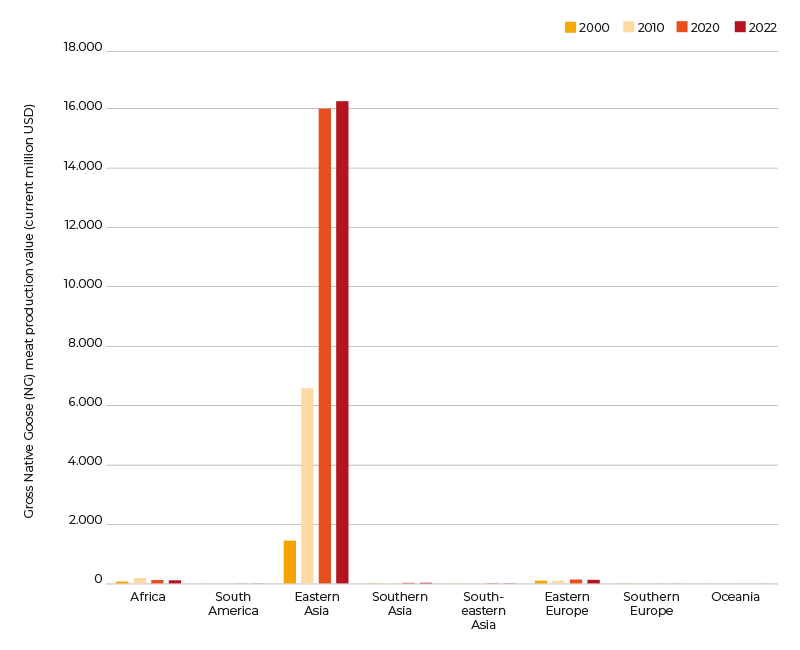
Figure 5. Gross Native Turkey (NT) meat production value (USD) in the world and by its regions and sub-regions from year 2000 to 2022 (data from FAOSTAT, 2025)
Current state and trends in gross NP meat production index numbers
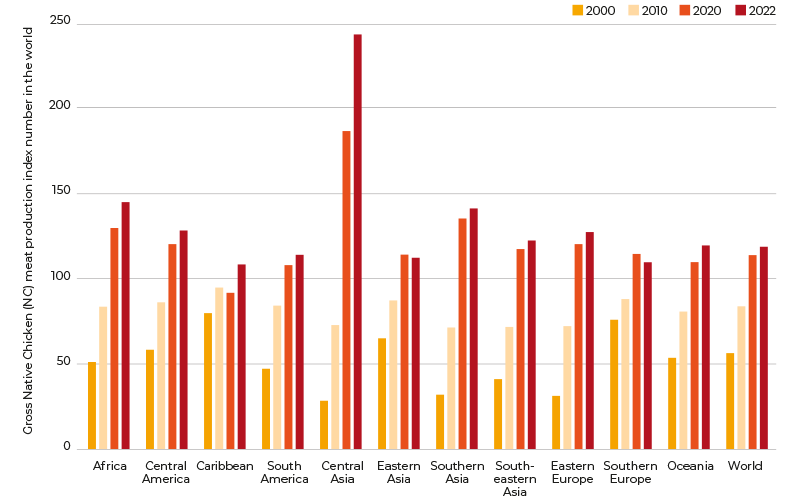
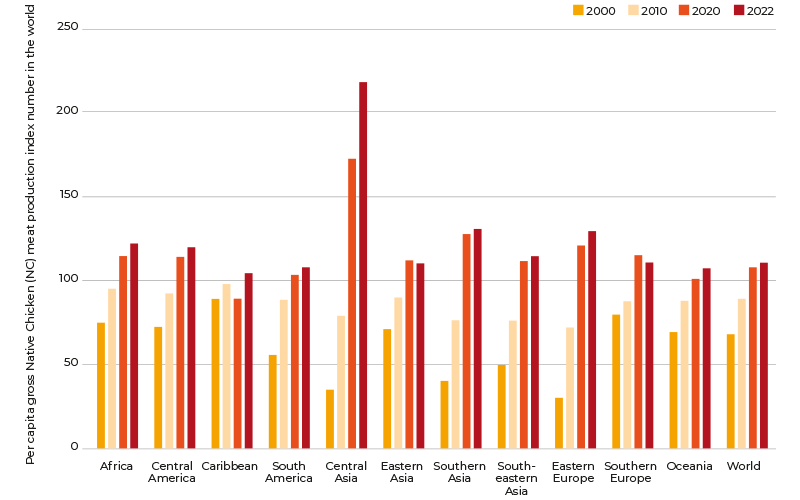
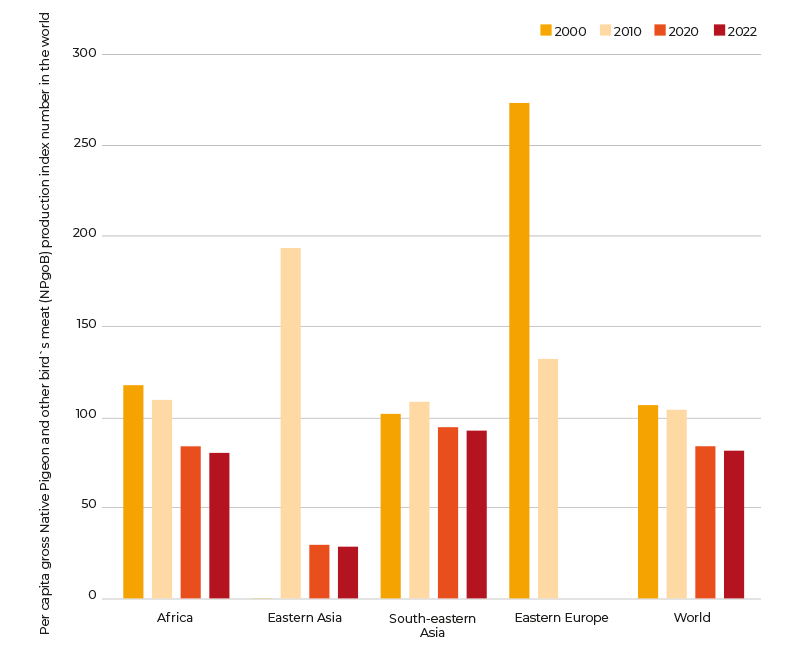
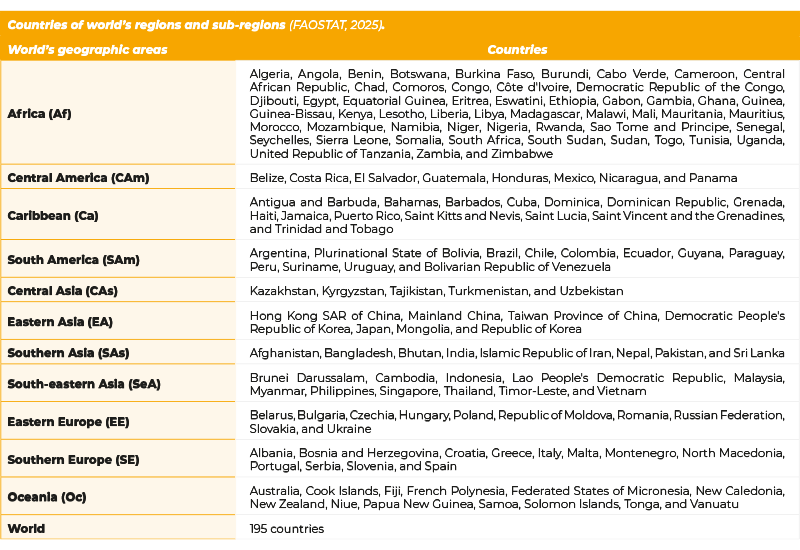
The world’s highest contributions to gross NP meat production index numbers (MPINs) and per capita gross NP MPINs (2014-2016=100) in 2022 were estimated at 243.9 for gross NC MPINs (Figure 6) and 218.6 for per capita gross NC MPINs (Figure 7) in EA; 843.7 for gross ND MPINs (Figure 8) and 851.7 for per capita gross ND MPINs (Figure 9); 168.4 for gross NG MPINs (Figure 10) and 165.2 for per capita gross NG MPINs (Figure 11) in EA; 219.9 for gross NT MPINs (Figure 12) and 223.3 for per capita gross NT MPINs (Figure 13) in EE; and 99.0 for gross NPgoB MPINs (Figure 14) and 92.5 for per capita gross NPgoB MPINs (Figure 15) in SeA (FAOSTAT, 2025).Figure 6. Gross Native Chicken (NC) meat production index number in the world and by regions and sub-regions as listed in the Appendix. The columns represent the production index during the years 2000-2022, the indices refer to 100 being the average of the years 2024 – 2026 as referenced by the FAO (data from FAOSTAT, 2025)
This results in relatively high indices for Gross Meat Production and Per Capita Gross Meat Production. The sharp decline in indices between 2000 and 2010 was a consequence of political systems and the associated challenges in agricultural production. While the importance of local duck breeds rebounded in 2020 and 2022—even surpassing index values from previous years—no similar trend is discernible regarding geese. In contrast to ducks, the production of native geese in the region were predominantly raised in small groups under extensive management systems.
In the wake of the economic restructuring of the poultry sector toward intensification, geese production did not follow this trend and declined sharply.
Figure 7. Per capita gross Native Chicken (NC) meat production index number in the world and by regions and sub-regions as listed in the Appendix. The columns represent the production index during the years 2000-2022, the indices refer to 100 being the average of the years 2024 – 2026 as referenced by the FAO (data from FAOSTAT, 2025)
This results in relatively high indices for Gross Meat Production and Per Capita Gross Meat Production. The sharp decline in indices between 2000 and 2010 was a consequence of political disturbances and the associated challenges in agricultural production.
While the importance of native duck breeds rebounded in 2020 and 2022—even surpassing index values from previous years—no similar trend is discernible regarding geese.
In contrast to ducks, the production of native geese in the region were predominantly raised in small groups under extensive management systems. In the wake of the economic restructuring of the poultry sector toward intensification, geese production did not follow this trend and declined sharply.
Figure 8. Gross Native Duck (ND) meat production index number in the world and by regions and sub-regions as listed in the Appendix. The columns represent the production index during the years 2000-2022, the indices refer to 100 being the average of the years 2014-2016 as referenced by the FAO (data from FAOSTAT, 2025)
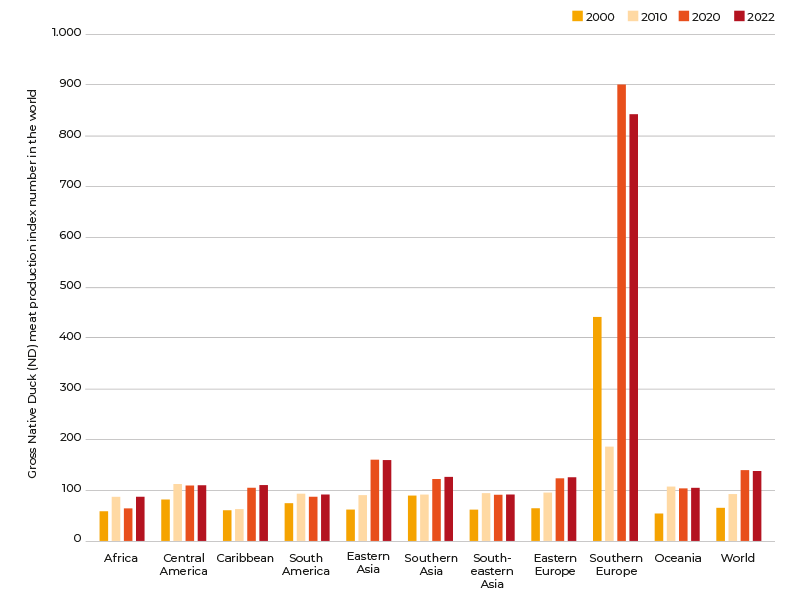
Figure 9. Per capita gross Native Duck (ND) meat production index number in the world and by regions and sub-regions as listed in the Appendix. The columns represent the production index during the years 2000-2022, the indices refer to 100 being the average of the years 2014-2016 as referenced by the FAO (data from FAOSTAT, 2025)
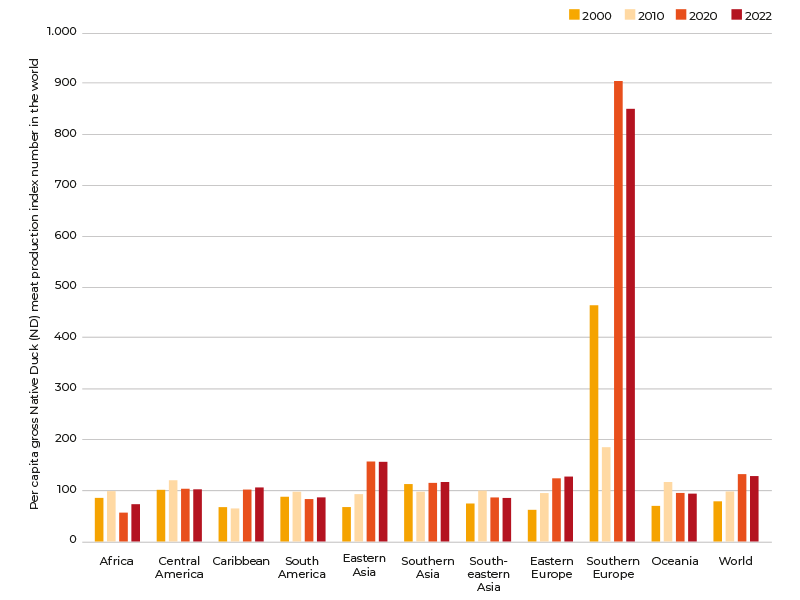
Figure 10. Gross Native Goose (NG) meat production index number in the world and by regions and sub-regions as listed in the Appendix. The columns represent the production index during the years 2000-2022, the indices refer to 100 being the average of the years 2014-2016 as referenced by the FAO (data from FAOSTAT, 2025)
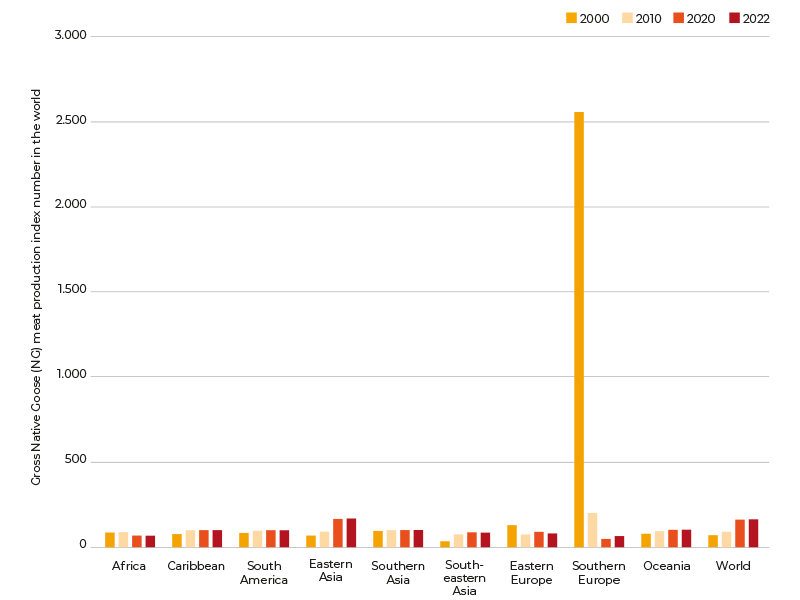
Figure 11. Per capita gross NG meat production index number in the world and by regions and sub-regions as listed in the Appendix. The columns represent the production index during the years 2000-2022, the indices refer to 100 being the average of the years 2014-2016 as referenced by the FAO (data from FAOSTAT, 2025)
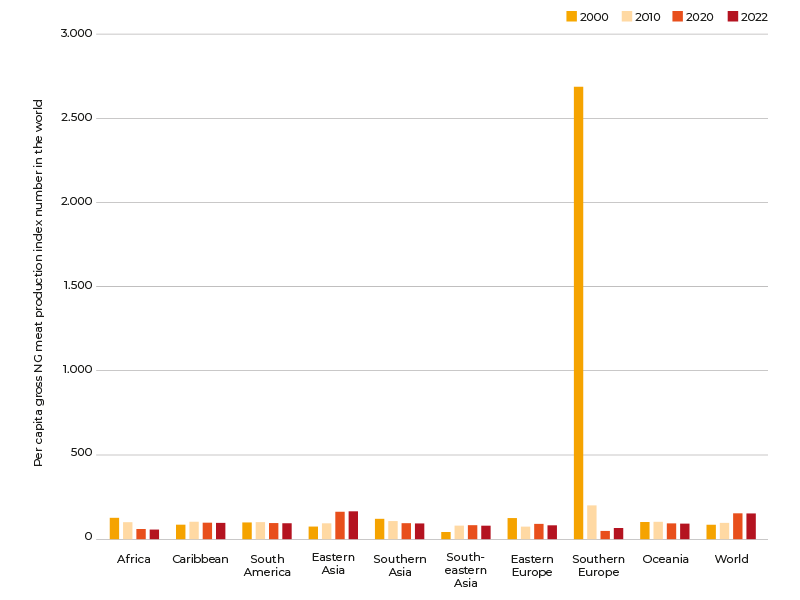
Figure 12. Gross Native Turkey (NT) production index number in the world and by regions and sub-regions as listed in the Appendix. The columns represent the production index during the years 2000-2022, the indices refer to 100 being the average of the years 2014-2016 as referenced by the FAO (data from FAOSTAT, 2025)
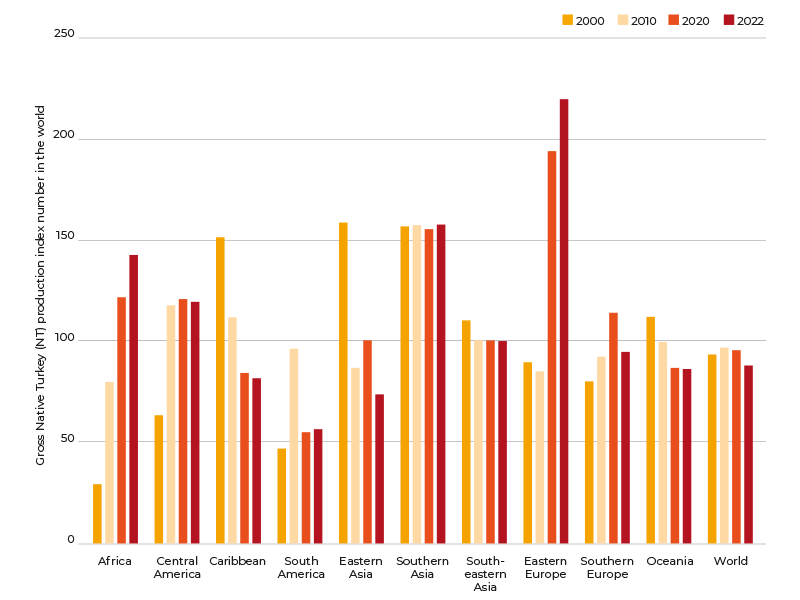
Figure 13. Per capita gross Native Turkey (NT) meat production index number in the world and by regions and sub-regions as listed in the Appendix. The columns represent the production index during the years 2000-2022, the indices refer to 100 being the average of the years 2014-2016 as referenced by the FAO (data from FAOSTAT, 2025)
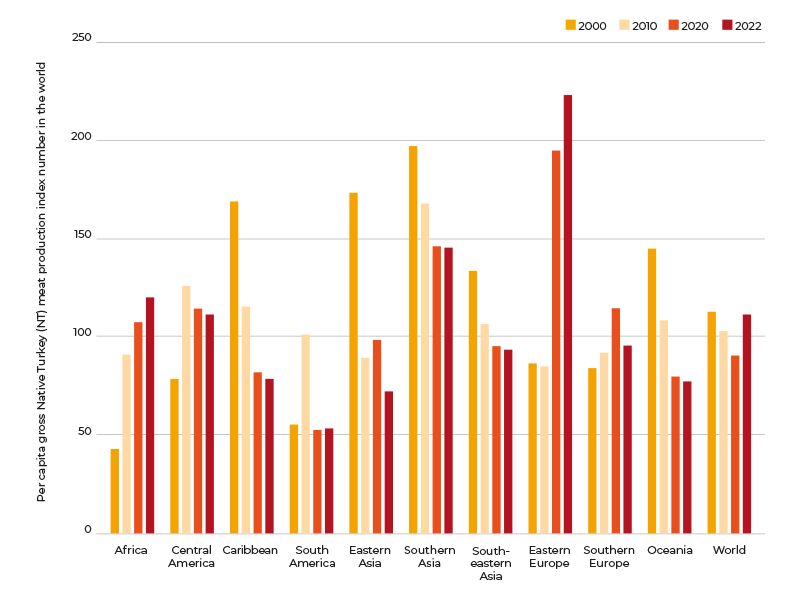
Figure 14. Gross Native Pigeon and other Bird`s (NPgoB) meat production index number in the world and by regions and sub-regions as listed in the Appendix. The columns represent the production index during the years 2000-2022, the indices refer to 100 being the average of the years 2014-2016 as referenced by the FAO (data from FAOSTAT, 2025)
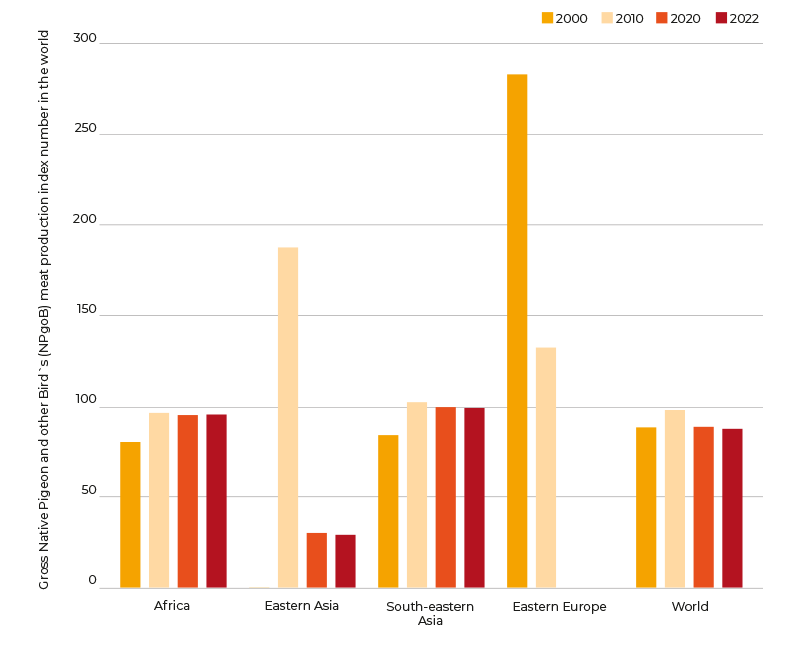
Figure 15. Per capita gross Native Pigeon and other bird`s meat (NPgoB) production index number in the world and by regions and sub-regions as listed in the Appendix. The columns represent the production index during the years 2000-2022, the indices refer to 100 being the average of the years 2014-2016 as referenced by the FAO (data from FAOSTAT, 2025)
Prospects for genetic improvement
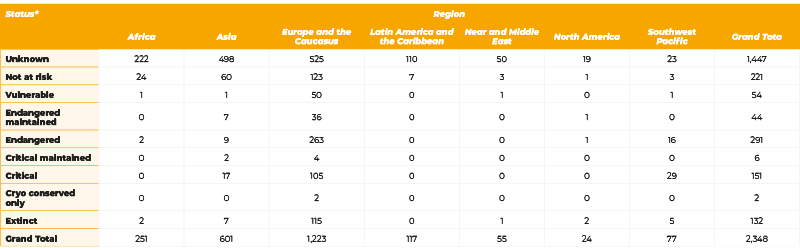
NP birds are characterized by their great phenotypic and genetic diversity in LLMICs (Guèye, 2002; Mwacharo et al., 2006; Spalona et al., 2007; Hoffmann, 2009; Mtileni et al., 2011, 2012; Shapiro et al., 2013; Lan Phuong, et al., 2014; Bigi et al., 2016; Dahloum et al., 2016; Dorji et al., 2017; Okumu et al., 2017; Bibi et al., 2021; Balog et al., 2024; Tixier-Boichard, 2025). The great variation in egg weight, growth rate, adult weight as well as the variability observed in the existence of different ecotypes demonstrates the great NP genetic diversity. This heterogeneity and the excellent adaptation to various harsh and resource-limited agro-ecological conditions and environments, including disease resistance indicates that NP form a rich gene pool and a vital reservoir of gene resources that is ideal for selective breeding and multiplication of the best genotype for a particular production environment. Therefore, NP birds should survive and need to be studied, preserved and conserved (Spalona et al., 2007; Hoffmann, 2009; Mtileni et al., 2011, 2012; Al-Qamashoui et al., 2014; Manyelo et al., 2020), each bird being a ‘running gene bank’ (Guèye, 2002). Therefore, NP are valuable genetic resources which ought to be preserved and conserved for future breeding improvement, especially as it is believed that, for example, 33% of NC breeds are facing extinction (FAO, 2007; Hoffmann, 2009). In 2025, 23.3% of the 2,348 NP breeds surveyed worldwide present a risk status ranking from vulnerable to critically endangered, and 5.6% are already extinct (Table 2). In Italy, 53 NC breeds have been described to date, the majority of which are reported to be endangered or extinct (Franzoni et al., 2021).Development programs aimed at improving husbandry, feeding and health care (Padhi, 2016) and productivity of NP birds ought to be sustainable in order to have lasting impacts on food and nutrition security, income generation and health of human populations in LLMICs. Padhi (2016) reported that genetic improvement of NP through selection may be time consuming but the improvement will be permanent. Through crossbreeding improvement may be faster (Mwacharo et al., 2006; Khan, 2008), but research of NP aims at the production of birds with higher production potential.
Table 2. Risk status of NP breeds (chickens, domestic ducks, Muscovy ducks, emus, geese, Guinea fowl, nandus, ostriches, partridges, peacocks, pheasants, pigeons, quails and turkeys) by region (FAO, 2025b)
Opportunities for future research and development
Despite all the published studies (Spalona et al., 2007; Mtileni et al., 2011, 2012; Shapiro et al., 2013; Lan Phuong, et al., 2014; Bigi et al., 2016; Dahloum, et al. 2016; Dorji et al., 2017; Okumu et al., 2017; Bibi et al., 2021; Balog et al., 2024), the genetic diversity inherent in LLMICs’ NP has yet to be fully further studied and described in detail and in a consistent and harmonized manner, after identifying the offered opportunities. Enough knowledge of the inter- and intra-specific genetic variation among different phenotypic lines should be gained, although such an information is a prerequisite for making informed decisions on sustainable conservation and genetic improvement. Therefore, it is necessary to assess and ascertain the diversity levels in NP birds in order to determine improvement and conservation priorities. Owing to the husbandry systems practiced by NP-keeping farmers and the resulting high risk of inbreeding, which may negatively affect diversity levels, improvements in knowledge and technical skills need to be considered for both NP-keeping farmers and extension workers.Further studies should focus on detailed assessment and ascertainment of morphometric variations and production characteristics of NP birds in different agro-eco-climatic zones using standardized protocols to ensure consistency and harmonization of results. Considering the wide variation in reproduction and production performances observed under both controlled semi-intensified and free range small extensive scavenging system, NP constitute a vast gene pool that could be exploited by breeders through selection. Moreover, numerous studies on the productivity, adaptability and resistance to various diseases and environmental factors such as heat stress of NP birds in various LLMICs’ regions are required. The basis and mechanisms behind the resistance of NP to fowl typhoid; Marek’s Disease and Newcastle diseases should be further assessed and ascertained, and the possibilities of transferring these traits to other poultry deeply explored. Furthermore, the presence of unique alleles or allelic combinations coding for specific production traits and characteristics related to more adaptability and disease resistance is of interest for genetic linkage studies associated with the identification of quantitative trait loci (QTLs).
The demand for food products from NP is increasing because of their image of “natural” products being more nutritious and healthier especially when raised extensive or organically and without industrial residues. The higher organoleptic properties of NP birds’ meat and eggs, compared with those of commercial poultry breeds which are considered as lacking in flavour and taste, are frequently mentioned. However, the organoleptic properties of NP birds’ meat and eggs should be quantified and, if confirmed, then NP birds could be used to further develop specific poultry breeds for niche markets.
Conclusions
Despite efforts to develop the intensive poultry sub-sector, NP farming is still very important in LLMICs of Africa, Central Asia, Eastern Asia, Southern Asia, South-eastern Asia, Central America, South America, Caribbean, Eastern Europe, Southern Europe, and Oceania.The paper shows the contributions of NP to food security, wealth creation and sustainable livelihoods under resource-limited conditions. Moreover, it calls for policies and strategies for the sustainable preservation and conservation of NP breeds in order to avoid extinction.
Disclosure statement
No potential conflict of interest was reported by the author.APPENDIX
References
Abdul-Rahman, I.I., Angsongna, C.B. and Baba, H. (2019). Guinea fowl (Numida meliagris) value chain: Preferences and constraints of consumers. African Journal of Food, Agriculture, Nutrition and Development 19(2): 14393-14414. https://doi.org/10.18697/ajfand.85.17335.Adoligbe, C., Fernandes, A., Osei-Amponsah, R., Adje, N.D., Gbedevi, R., Fonton, M.-C., Rosa, G.J.M. and Souaibou, F.S. (2020). Native chicken farming: A tool for wealth creation and food security in Benin. International Journal of Livestock Production 11(4): 146-162. https://doi.org/10.5897/IJLP2020.0716.
Adomako, K. (2009). Local domestic chickens: their potential and improvement. PhD Thesis, Kwame Nkrumah University of Science and Technology, Kumasi, Ghana, September 2009, 286 pp.
Alders, R., De’ Besi, G., Costa, R., Guèye, E.F., Wong, J.T., Ahmed, S. and Ingabire, C. (2022). Efficiently and sustainably nourishing people and poultry in the 21st Century: challenges and opportunities. Proceedings of Invited Lectures, World’s Poultry Congress, 07-11 August 2022, Paris, France, pp. 79-92. https://www.wpsa.fr/images/publications/wpc2021/22WPC_Proceedings_of_Invited_Lectures_final.pdf.
Alders, R.G., Campbell, A., Costa, R., Guèye, E.F., Ahasanul Hoque, Md., Perezgrovas-Garza, R., Rota, A. and Wingett, K. (2021). Livestock across the world: diverse animal species with complex roles in human societies and ecosystem services. Animal Frontiers, Vol. 11, Issue 5, October 2021, pp. 20-29. https://doi.org/10.1093/af/vfab047.
Alders, R.G., Dumas, S.E., Rukambile, E., Magoke, G., Maulaga, W., Jong, J. and Costa, R. (2018). Family poultry: Multiple roles, systems, challenges, and options for sustainable contributions to household nutrition security through a planetary health lens. Maternal and Child Nutrition 14(S3): e12668. https://doi.org/10.1111/mcn.12668.
Alders, R.G. and Pym, R.A.E. (2009). Village poultry: still important to millions, eight thousand years after domestication. World’s Poultry Science Journal 65(2): 181-190. http://dx.doi.org/10.1017/S0043933909000117.
Alders, R.G. (2012). Challenges and opportunities for small-scale family poultry production in developing countries. Proceedings of the XXIV World´s Poultry Congress, 5-9 August 2012, Salvador-Bahia, Brazil.
Al-Qamashoui, B., Mahgoub, O., Kadim, I. and Schlecht, E. (2014). Towards conservation of Omani local chicken: Phenotypic characteristics, management practices and performance traits. Asian-Australasian Journal of Animal Sciences 27(6): 767-777. https://doi.org/10.5713/ajas.2013.13541.
Anonymous (2024). Guinea fowl. AZ Animals, 27 May 2024. a-z-animals.com/animals/guinea-fowl (accessed 03 March 2025).
Armitage, N. (2021). The history and origin of Guinea fowl. Cluckin.net, 11 July 2021. https://cluckin.net/the-history-and-origin-of-guinea-fowl.html (accessed 17 August 2025).
Asencio, K., Alcalde, J.A., Gandarillas, M., Keim, J.P. and Echeverría, R. (2023). Research Note: Characterization of peasant family poultry farming in Southern Chile. Poultry Science 102(2): 102339. https://doi.org/10.1016/j.psj.2022.102339.
Aussie Animals (2025). Domestic pigeons in Australia. https://aussieanimals.com/introduced-species/domestic-pigeon (accessed 17 August 2025).
Bagnol, B. (2001). The social impact of Newcastle disease control, in: ALDERS, R.G. & SPRADBROW, P.B. (Eds.) SADC Planning Workshop on Newcastle Disease Control in Village Chickens, Proceedings No. 103, ACIAR, Canberra, Australia, pp. 69-75. https://www.aciar.gov.au/sites/default/files/legacy/node/2131/pr103_pdf_63743.pdf.
Balog, K., Wadday, A.S., Al-Hasan, B.A., Wanjala, G., Kusza, Sz., Fehér, P., Stéger, V. and Bagi, Z. (2024). MtDNA genetic diversity and phylogeographic insights into giant domestic pigeon (Columba livia domestica) breeds: connections between Central Europe and the Middle East. Poultry Science 103: 104310. https://doi.org/10.1016/j.psj.2024.104310.
Baptista, L.F., Martínez Gómez, J.E. and Horblit, H.M. (2009). Darwin’s pigeons and the evolution of the Columbiforms: Recapitulation of ancient genes. Acta Zoológica Mexicana 25(3): 719-741.
Benabdeljelil, K. and Arfaoui, T. (2001). Characterization of Beldi chicken and turkeys in rural poultry flocks of Morocco. Current state and future outlook. Animal Genetic Resources Information 31: 87-95. http://dx.doi.org/10.1017/S1014233900001516.
Besbes, B., Thieme, O., Rota, A., Guèye, E.F. and Alders, R.G. (2012). Technology and programmes for sustainable improvement of village poultry production, in: Sandilands, V. & Hocking, P.M. (Eds.) Alternative Systems for Poultry – Health, Welfare and Productivity, Poultry Science Symposium Series, Vol. 30, CAB International 2012, pp. 110-127.
Bibi, S., Khan, M.F., Noreen, S., Rehman, A., Khan, N., Mehmood, S. and Shah, M. (2021). Morphological characteristics of native chicken of village Chhajjian, Haripur Pakistan. Poultry Science 100:100843. https://doi.org/10.1016/j.psj.2020.11.022.
Bigi, D., Mucci, N., Mengoni, C., Baldaccini, E.N. and Randi, E. (2016). Genetic investigation of Italian domestic pigeons increases knowledge about the long-bred history of Columba livia (Aves: Columbidae). Italian Journal of Zoology 83(2): 173-182. http://dx.doi.org/10.1080/11250003.2016.1172121.
Blechman, A.D. (2007). Pigeons: The fascinating saga of the world’s most revered and reviled bird. University of Queensland Press, St Lucia, Queensland, Australia, pp. 239.
Branckaert, R.D.S. and Guèye, E.F. (2000). FAO’s programme for support to family poultry production. In: Proceedings of a Workshop on Poultry as a Tool in Poverty Eradication and Promotion of Gender Equality, edited by F. Dolberg, and P.H. Petersen, 244-256. Tune, Denmark. http://www.fao.org/3/ac154e/AC154E09.htm#ch5.4.
Brophy, H. (2022). Guinea fowl symbolism & meaning (+totem, spirit & omens). World Birds, 7 February 2022. https://worldbirds.com/guinea-fowl-symbolism (accessed 17 August 2025).
Chaiban, C., Robinson, T.P., Fèvre, E.M., Ogola, J., Akoko, J., Gilbert, M. and Vanwambeke, S.O. (2020). Early intensification of backyard poultry systems in the tropics- a case study. Animal 14: 11, pp. 2387- 2396. DOI: https://doi.org/10.1017/S175173112000110X.
Dahloum, L., Moula, N., Halbouche, M. and Mignon-Grasteau, S. (2016). Phenotypic characterization of the indigenous chickens (Gallus gallus) in the northwest of Algeria, Archives Animal Breeding 59: 79-90. https://doi.org/10.5194/aab-59-79-2016.
De Bruyn, J., Wong, J., Bagnol, B., Pengelly, B. and Alders, R. (2015). Family poultry production and food and nutrition security. CAB Reviews 10(13): 1-9. http://dx.doi.org/10.1079/PAVSNNR201510013.
Di Pillo, F., Anríquez, G., Alarcón, P., Jimenez-Bluhm, P., Galdames, P., Nieto, V., Schultz-Cherry, S. and Hamilton-West, C. (2019). Backyard poultry production in Chile: animal health management and contribution to food access in an upper middle-income country. Preventive Veterinary Medicine 164; 41-48. https://doi.org/10.1016/j.prevetmed.2019.01.008.
Dorji, J., Tamang, S., Tshewang and Dorji, T.Y. (2017). Morphometric variations of native chicken types in backyard farms of Bhutan. Livestock Research for Rural Development 29(9). http://www.lrrd.org/lrrd29/9/jigm29175.html.
Dorji, N. and Gyeltshen, T. (2012). Characterisation of family poultry production in Haa and Mongar districts of Bhutan. Livestock Research for Rural Development 24(9). http://www.lrrd.org/lrrd24/9/dorj24155.htm.
Ebwa, J., Monzenga, J.C., Mosala, F., Rutakaza, N. and Ebwa, J. (2019). Aviculture traditionnelle dans la ville de Kisangani, Province de la Tshopo en République Démocratique du Congo. Revue Marocaine des Sciences Agronomiques et Vétérinaires 7(3): 447-451. https://www.agrimaroc.org/index.php/Actes_IAVH2/article/view/743/880.
Eda, M., Itahashi, Y., Kikuchi, H., Sun, G., Hsu, K.-H., Gakuhari, T., Yoneda, M., Jiang, L., Yang, G. and Nakamura, S. (2022). Multiple lines of evidence of early goose domestication in a 7,000-y-old rice cultivation village in the lower Yangtze River, China. Edited by Fiona Marshall, Anthropology, Washington University in St. Louis, Saint Louis, MO. https://doi.org/10.1073/pnas.2117064119.
Emuron, N., Magala, H., Kyazze, F.B., Kugonza, D.R. and Kyarisiima, C.C. (2010). Factors influencing the trade of local chickens in Kampala city markets. Livestock Research for Rural Development 22(4). http://www.lrrd.org/lrrd22/4/emur22076.htm.
FAO and IFAD (2022). Farmer field schools for family poultry producers – A practical manual for facilitators. Food and Agriculture Organization of the United Nations and International Fund for Agricultural Development, Rome, Italy, pp. 220. https://www.fao.org/3/cc0254en/cc0254en.pdf.
FAO (2025a). Gateway to poultry production and products. https://www.fao.org/poultry-production-products/en (accessed 17 August 2025).
FAO (2025b). Risk status of animal genetic resources. Domestic Animal Diversity Information System (DAD-IS), FAO, Rome, Italy. https://www.fao.org/dad-is/risk-status-of-animal-genetic-resources/en (accessed 17 August 2025).
FAO (2018). World livestock: transforming the livestock sector through the Sustainable Development Goals. Food and Agriculture Organization of the United Nations, Rome. https://www.fao.org/3/CA1201EN/ca1201en.pdf (accessed 17 August 2025).
FAO (2007). The state of the world’s animal genetic resources for food and agriculture. Rischkowsky, B. and Pilling, D., Eds., FAO, Rome, Italy, 524 pp.
FAO (2004). Small-scale poultry production: technical guide. FAO Animal Production and Health Manual #1, Rome. http://www.fao.org/docrep/008/y5169e/y5169e00.htm.
FAO, IFAD, UNICEF, WFP and WHO (2025). The State of Food Security and Nutrition in the World 2025 – Addressing high food price inflation for food security and nutrition. Rome, FAO, pp. 234. https://doi.org/10.4060/cd6008en.
FAOSTAT (2025). FAO statistical database. www.fao.org/faostat/en/#data (accessed 17 August 2025).
Figueiredo, E.A.P. (2012). Entrepreneurial small-scale family poultry production in developing countries. Proceedings of the XXIV World´s Poultry Congress, 5-9 August 2012, Salvador-Bahia, Brazil.
Franzoni, A., Gariglio, M., Castillo, A., Soglia, D., Sartore, S., Buccioni, A., Mannelli, F., Cassandro, M., Cendron, F., Castellini, C., Cartoni Mancinelli, A., Cerolini, S., Sayed, A.A., Iaffaldano, N., Di Iorio, M., Marzoni, M., Salvucci, S. and Schiavone, A. (2021). Overview of native chicken breeds in Italy: Small scale production and marketing. Animals 11, 629. https://doi.org/10.3390/ani11030629.
Fiorillo, F. (2020). The Indian Runner Duck – One of the oldest domestic duck breeds. Avibirds, 29 October 2020. https://avibirds.com/indian-runner-duck.
Gilbert, M.T.P. and Shapiro, M.D. (2014). Pigeons: Domestication. In: Smith, C. (eds) Encyclopedia of Global Archaeology. Springer, New York, NY. https://doi.org/10.1007/978-1-4419-0465-2_2214.
Guèye, E.F. (2025). Trends, prospects and the socio-economic contribution of poultry value chains to food security and wealth creation in Africa. Lohmann Information ◦ 2025/01. https://lohmann-breeders.com/lohmanninfo/trends-prospects-and-the-socio-economic-contribution-of-poultry-value-chains-to-food-security-and-wealth-creation-in-africa.
Guèye, E.F. (2024). Trends and prospects of poultry value chains in Africa. Journal of Agriculture, Science and Technology 23(4): 19-46. https://ojs.jkuat.ac.ke/index.php/JAGST/article/view/690/371.
Guèye, E.F. (2022). Making family poultry value chain more mature and sustainable at a small scale. Proceedings of Invited Lectures, World’s Poultry Congress, 07-11 August 2022, Paris, France, pp. 348-364. https://www.wpsa.fr/images/publications/wpc2021/22WPC_Proceedings_of_Invited_Lectures_final.pdf.
Guèye, E.F. (2012). Family poultry in developing countries. ISA Focus, 7 January 2012, pp. 5-6.
Guèye, E.F. (2005). Gender aspects in family poultry management systems in developing countries. World’s Poultry Science Journal 61(1): 39-46. https://doi.org/10.1079/WPS200440.
Guèye, E.F. (2003a). Poverty alleviation, food security and the well-being of the human population trough family poultry in low-income food-deficit countries. Journal of Food, Agriculture & Environment 1(2): 12-21.
Guèye, E.F. (2003b). Gender issues in family poultry production systems in low-income food-deficit countries. American Journal of Alternative Agriculture 18(4): 185-195. https://www.jstor.org/stable/44503270.
Guèye, E.F. (2002). Family poultry research and development in low-income food-deficit countries: approaches and prospects. Outlook on Agriculture 31(1): 13-21. https://doi.org/10.5367/000000002101293822.
Guèye, E.F. (1999). Ethnoveterinary medicine against poultry diseases in African villages. World’s Poultry Science Journal 55(2): 187-198. https://doi.org/10.1079/WPS19990013.
Guèye, E.F. (1998). Village egg and fowl meat production in Africa. World’s Poultry Science Journal 54(1): 73-86. https://doi.org/10.1079/WPS19980007.
Guo, X., He, X.-X., Chen, H., Wang, Z.-C., Li, H.-F., Wang, J.-X., Wang, M.-S. and Jiang, R.-S. (2021). Revisiting the evolutionary history of domestic and wild ducks based on genomic analyses. Zoological Research 42(1): 43-50. https://dx.doi.org/10.24272/j.issn.2095-8137.2020.133.
Hata, A., Nunome, M., Suwanasopee, T., Duengkae, P., Chaiwatana, S., Chamchumroon, W., Suzuki, T., Koonawootrittriron, S., Matsuda, Y. and Srikulnath, K. (2021). Origin and evolutionary history of domestic chickens inferred from a large population study of Thai red junglefowl and indigenous chickens. Scientific Reports, Vol. 11, Article No. 2035. https://doi.org/10.1038/s41598-021-81589-7.
Hoffmann, I. (2009). The global plan of action for animal genetic resources and the conservation of poultry genetic resources. World’s Poultry Science Journal, 65(2): 286-297. https://doi.org/10.1017/S0043933909000245.
Houndonougbo, P.V., Bindelle, J., Chrysostome, C.A.A.M., Hammami, H. and Gengler, N. (2017). Characteristics of Guinea fowl breeding in West Africa: A review. Tropicultura 35 (3): 222-230. https://popups.uliege.be/2295-8010/index.php?id=1283 (accessed 17 August 2025).
Islam, R., Nath, P., Bharali, A. and Borah, R. (2015). Analysis of benefit-cost (B: C) ratio of Vanaraja and local chicken of Assam under backyard system of rearing. Journal of Research in Agriculture and Animal Science 3(7): 07-10. https://www.questjournals.org/jraas/papers/vol3-issue7/B370710.pdf.
Indian Runner Duck Club (2023). History of the Indian Runner Duck. Last update on 16 October 2023. https://runnerduck.net/history.php.
Ismoyowati and Setianto, N.A. (2021). The dynamics of population and production of Native Chicken under extensive- and semi-intensive maintenance. IOP Conference Series: Earth and Environmental Science, Vol. 902, 012015. http://dx.doi.org/10.1088/1755-1315/902/1/012015.
Jerolmack, C. (2007). Animal archeology: Domestic pigeons and the nature-culture dialectic. Qualitative Sociology Review 3(1). https://doi.org/10.18778/1733-8077.3.1.06.
Jim (2021). Poultry industry grows across East Africa, but challenges remain. Poultry Producer, December 8, 2021. https://www.poultryproducer.com/poultry-industry-grows-across-east-africa-but-challenges-remain/ (accessed 17 August 2025).
Khan, A.G. (2008). Indigenous breeds, crossbreds and synthetic hybrids with modified genetic and economic profiles for rural family and small scale poultry farming in India. World’s Poultry Science Journal 64(3): 405-415. https://doi.org/10.1017/S0043933908000135.
Laatsch, D.R. (2025a). Origin and history of the chicken – Livestock. Division of Extension, University of Wisconsin-Madison, U.S.A. https://livestock.extension.wisc.edu/articles/origin-and-history-of-the-chicken (accessed 17 August 2025).
Laatsch, D.R. (2025b). The Origin of Ducks – Livestock. Division of Extension, University of Wisconsin-Madison, U.S.A. https://livestock.extension.wisc.edu/articles/the-origin-of-ducks (accessed 17 August 2025).
Larson, G. and Fuller, D.Q. (2014). The evolution of animal domestication. Annual Review of Ecology, Evolution, and Systematics 45(1): 115-136. doi.org/10.1146/annurev-ecolsys-110512-135813
Lehr, A. (2024). Raising Guinea fowl: The ultimate guide. Grubbly Farms, 31 January 2024. grubblyfarms.com/blogs/the-flyer/raising-guinea-fowl-the-ultimate-guide (accessed 23 January 2025).
Mannermaa, K. (2014). Goose: Domestication. In: Smith, C. (eds) Encyclopedia of Global Archaeology. Springer, New York, NY. https://doi.org/10.1007/978-1-4419-0465-2_2208.
Manyelo, T.G., Selaledi, L., Hassan, Z.M. and Mabelebele, M. (2020). Local chicken breeds of Africa: Their description, uses and conservation methods. Animals 10, 2257. https://doi.org/10.3390/ani10122257.
McKenzee, G. (2020). Domesticated ducks: How we got here. The Open Sanctuary Project, 31 January 2020. https://opensanctuary.org/domestic-ducks-how-we-got-here (accessed 17 August 2025).
McKenzee, G. (2018). Turkeys: How we got here. The Open Sanctuary Project, 20 March 2018. https://opensanctuary.org/turkeys-how-we-got-here (accessed 17 August 2025).
Moreki, J.C., Poroga, B., Dikeme, R. and Seabo, D. (2010). Ethnoveterinary medicine and health management in poultry in Southern and Western Districts, Botswana. Livestock Research for Rural Development 22(6). http://www.lrrd.cipav.org.co/lrrd22/6/more22107.htm.
Moges, F., Mellesse, A. and Dessie, T. (2010). Assessment of village chicken production system and evaluation of the productive and reproductive performance of local chicken ecotype in Bure district, Northwest Ethiopia. African Journal of Agricultural Research 5(13), 1739-1748. https://cgspace.cgiar.org/handle/10568/2484.
Mseleku, C., Chimonyo, M., Slotow, R., Mhlongo, L.C. and Ngidi, M.S.C. (2023). Contribution of village chickens in sustainable and healthy food systems for children along a rural-urban gradient: A systematic review. Foods 12(19), 3553. https://doi.org/10.3390/foods12193553.
Mtileni, B.J., Muchadeyi, F.C., Maiwashe, A., Chimonyo and Dzama (2012). Conservation and utilisation of indigenous chicken genetic resources of South Africa. World’s Poultry Science Journal 68(4): 727-748. https://doi.org/10.1017/S0043933912000852.
Mtileni, B.J., Muchadeyi, F.C., Maiwashe, A., Groeneveld, E., Groeneveld, L.F., Dzama, K. and Weigend, S. (2011). Genetic diversity and conservation of South African indigenous chicken populations. Journal of Animal Breeding and Genetics 128(3): 209-18. https://doi.org/10.1111/j.1439-0388.2010.00891.x.
Mugumaarhahama, Y., Ayagirwe, R.B.B., Mutwedu, V.B., Sadiki, J.M., Baenyi, P., Mushagalusa, A.C. and Bisimwa, E.B. (2016). Local chicken production system assessment in two agro-ecological zones of South-Kivu (Democratic Republic of Congo. Livestock Research for Rural Development 28(1). http://www.lrrd.org/lrrd28/1/mugu28007.html.
Mujyambere, V., Adomako, K., Olympio, S.O., Ntawubizi, M., Nyinawamwiza, L., Mahoro, J. and Conroy, A. (2022). Local chickens in East African region: their production and potential. Poultry Science 101:101547. https://doi.org/10.1016/j.psj.2021.101547.
Mwacharo, J.M., Jianlin, H. and Amano, T. (2006). Native African Chicken: Valuable genetic resources for future breeding improvement. The Journal of Animal Genetics 34(2): 63-69. https://doi.org/10.5924/abgri2000.34.2_63.
Nahimana, G., Ossebi, W., Missohou, A. and Ayssiwede, S.B. (2019). Analyse de l’importance socio-économique de l’aviculture familiale dans le Département de Salémata au Sénégal. International Journal of Biological and Chemical Sciences 13(7): 3131-3143. https://dx.doi.org/10.4314/ijbcs.v13i7.13.
Nahimana, G., Missohou, A., Ayssiwede, S.B., Cissé, P., Butore, J. and Touré, A. (2016). Family poultry practices in Eastern Senegal and Haute-Casamance. Livestock Research for Rural Development 28(5). http://www.lrrd.org/lrrd28/5/nahi28088.html.
Nakkazi, C., Kayitesi, A., Mulindwa, H.E., Kugonza, D.R. and Okot, M.W. (2014). The status of local chicken (Gallus domesticus) production in Northern Uganda. Livestock Research for Rural Development 26(11). http://www.lrrd.org/lrrd26/11/nakk26198.html.
Ochieng, J., Owuor, G. and Bebe, B.O. (2013). Management practices and challenges in smallholder indigenous chicken production in Western Kenya. Journal of Agriculture and Rural Development in the Tropics and Subtropics 114(1): 51-58. https://urn.fi/urn:nbn:de:hebis:34-2013030542607.
Okumu, O.N., Ngeranwa, J.J.N., Binepal, Y.S., Kahi, A.K., Bramwel, W.W., Ateya, L.O. and Wekesa, F.C. (2017). Genetic diversity of indigenous chickens from selected areas in Kenya using microsatellite markers. Journal of Genetic Engineering and Biotechnology 15,489-495. http://dx.doi.org/10.1016/j.jgeb.2017.04.007.
Ousseini, M.H., Nouri, B. and Mahamadou Laminou, S.G. (2024). Production characteristics of local Guinea fowl (Numida Meleagris) in the urban commune of Tessaoua, Niger. Asian Journal of Advances in Agricultural Research 24 (7): 70-79. https://doi.org/10.9734/ajaar/2024/v24i7524.
Padhi, M.K. (2016). Importance of indigenous breeds of chicken for rural economy and their improvements for higher production performance. Scientifica 2016, Article ID 2604685, 9 pp. http://dx.doi.org/10.1155/2016/2604685.
Pennisi, E. (2013). The secret of the pigeon’s crest. Science, 31 January 2013. https://www.science.org/content/article/secret-pigeons-crest (accessed 17 August 2025).
Peters, J., Lebrasseur, O., Irving-Pease, E.K., Dimitrios Paxinos, P., Best, J., Smallman, R., Callou, C., Gardeisen, A., Trixl, S., Frantz, L., Sykes, N., Fuller, D.Q. and Larson, G. (2022). The biocultural origins and dispersal of domestic chickens. Proceedings of the National Academy of Sciences, 6 June 2022, 119(24) e2121978119. https://www.pnas.org/doi/10.1073/pnas.2121978119.
Price, T.D. (2002). Domesticated birds as a model for the genetics of speciation by sexual selection. Genetica 116: 311-327. http://dx.doi.org/10.1023/A:1021248913179.
Qu, L. and Wen, J. (2022). Origins, timing and introgression of domestic geese revealed by whole genome data. Journal of Animal Science 100 (3): 16-17. https://doi.org/10.1093/jas/skac247.030.
Rawat, S.K., Dwivedi, S. and Narain, S. (2015). Backyard poultry production in Mahoba: A socio-economic analysis. An International Journal of Agro Economist 2(1): 19-27. http://www.renupublishers.com/images/article/14544116864.pdf.
Sayda, Ali, A.M., Bakheet, M.A. and Elnazeer, A.E. (2012). Rural poultry keeping in South Gezira, Sudan. Pertanika Journal of Tropical Agriculture 35(3): 563-574. https://api.semanticscholar.org/CorpusID:131529264
Shapiro, M.D., Kronenberg, Z., Cai, L., Domyan, E.T., Pan, H., Campbell, M., Tan, H., Huff, C.D., Hu, H., Vickrey, A.I., Nielsen, S.C.A., Stringham, S.A., Hu, H., Willerslev, E., Gilbert, M.T.P., Yandell, M., Zhang, G. and Wang, J. (2013). Genomic diversity and evolution of the head crest in the rock pigeon. Science 339: 1063-7. https://doi.org/10.1126/science.1230422.
Singh, M., Patton, R.N., Mollier, R.T., Pongener, N., Yadav, R., Singh, V., Katiyar, R., Singh, G.D., Deori, S., Doley, S., Chaudhary, J.K., Babu, S., Kalita, H. and Mishra, V.K. (2023) Indigenous chicken production system in different agro-ecology of Indian Himalayan Region: implication on food and economic security. Frontiers in Nutrition 10: 1244413. https://doi.org/10.3389/fnut.2023.1244413.
Smith, J. (2024). Tracing the wild origins of the domestic turkey. The Cool Green Science Newsletter. https://blog.nature.org/2017/11/20/tracing-the-wild-origins-of-the-domestic-turkey (accessed 17 August 2025).
Smith W.J., Sendell-Price, A.T., Fayet, A.L., Schweizer, T.M., Jezierski, M.T., Van De Kerkhof, C., Sheldon, B.C., Ruegg, K.C., Kelly, S., Turnbull, L.A. and Clegg, S.M. (2022). Limited domestic introgression in a final refuge of the wild pigeon. iScience 25(7): 104620. https://doi.org/10.1016/j.isci.2022.104620.
Snively-Martinez, A. and Quinlan, M.B. (2019). Family poultry systems on the Southern Pacific Coast of Guatemala: Gender, livelihoods, and food security. Journal of Ethnobiology 39(4): 493-509. https://doi.org/10.2993/0278-0771-39.4.493.
Speller, C. (2014). Turkey: Domestication. In: Smith, C. (eds) Encyclopedia of Global Archaeology. Springer, New York, NY. https://doi.org/10.1007/978-1-4419-0465-2_2219.
Stein, M. (2019). The long, surprising journey of the domestic wild turkey. BirdNote, National Audubon Society. https://www.audubon.org/news/the-long-surprising-journey-domestic-wild-turkey (accessed 17 August 2025).
Stringham, S.A., Mulroy, E.E., Xing, J., Record, D., Guernsey, M.W., Aldenhoven, J.T., Osborne, E.J. and Shapiro, M.D. (2012). Divergence, convergence and the ancestry of feral populations in the domestic rock pigeon. Current Biology 22: 302-8. https://doi.org/10.1016/j.cub.2011.12.045.
Sumy, M.C., Khokon, M.S.I., Islam, M.M. and Talukder, S. (2010). Study on the socio-economic condition and productive performances of backyard chicken in some selected areas of Pabna district. Journal of Bangladesh Agricultural University 8(1): 45-50. http://dx.doi.org/10.22004/ag.econ.208463.
Tabler, T., Khaitsa, M.L., Wells, J. and Moon, J. (2021). Poultry industry grows across East Africa, but challenges remain. Publication 3730 (POD-11-21), Extension Service of Mississippi State University. https://extension.msstate.edu/publications/poultry-industry-grows-across-east-africa-challenges-remain (accessed 17 August2025).
Tenza, T., Mhlongo, L.C., Ncobela, C.N. and Rani, Z. (2024). Village chickens for achieving Sustainable Development Goals 1 and 2 in resource-poor communities: A literature review. Agriculture 14(8), 1264. https://doi.org/10.3390/agriculture14081264.
Tixier-Boichard, M. (2025). The concept of native poultry: from genetic diversity to local farming systems. Proceedings, 1st World Native Poultry Conference, 12 March 2025, Bangkok, Thailand.
Lan Phuong, T.N., Barta, I., Bódi, L., Dong Xuan, K.D.T., Kovács, J.N., Ferencz, T.R. and Szalay, I.T. (2014). Egg production profiles of seven traditional Hungarian chicken breeds. European Poultry Science 78. https://doi.org/10.1399/eps.2014.69.
Pym, R.A.E., Guerne Bleich, E. and Hoffmann, I. (2006). The relative contribution of indigenous chicken breeds to poultry meat and egg production and consumption in the developing countries of Africa and Asia. 12th European Poultry Conference, 10-14 Sept. 2006, Verona, Italy.
Salgado Pardo, J.I., Navas González, F. J., González Ariza, A., León Jurado, J. M., Barba Capote, C., Delgado Bermejo, J.V. and Camacho Vallejo, M.E. (2022). The origin of the domestic turkey and early distribution in Europe. Book of Abstracts, 7th Mediterranean Poultry Summit, 08-10 June 2022, Córdoba, Spain.
Soara, A.E., Talaki, E., Dayo, G.-K., Oke, O.E., Belem, A.M.G. and Tona, K. (2020). Indigenous Guinea fowl (Numida meleagris) production in West Africa: inventory, performances and constraints – a review. European Poultry Science 84. http://www.doi.org/10.1399/eps.2020.303.
Spalona, A., Ranvig, H., Cywa-Benko, K., Zanon, A., Sabbioni, A., Szalay, I., Benková, J., Baumgartner, J. and Szwaczkowski, T. (2007). Population size in conservation of local chicken breeds in chosen European countries. Archiv für Geflügelkunde 71(2): 49-55. https://researchprofiles.ku.dk/da/publications/population-size-in-conservation-of-local-chicken-breeds-in-chosen.
Thieme, O., Sonaiya, F., Rota, A., Guèye, E.F., Dolberg, F. and Alders, R. (2014). Defining family poultry production systems and their contribution to livelihoods. In: Decision tools for family poultry development. FAO Animal Production and Health Guidelines No. 16. Rome, Italy, pp.3-8. https://www.fao.org/4/i3542e/i3542e.pdf
United Nations (2025). World population data. https://www.un.org/development/desa/pd (accessed 17 August2025).
Vignal, A., Boitard, S., Thébault, N., Dayo, G.‐K., Yapi‐Gnaore, V., Abdou Karim, I.Y., Berthouly‐Salazar, C., Pálinkás‐Bodzsár, N., Guémené, D., Thibaud‐Nissen, F., Warren, W. C., Tixier‐Boichard, M. and Rognon, X. (2019). A guinea fowl genome assembly provides new evidence on evolution following domestication and selection in galliformes. Molecular Ecology Resources 19(4): 997-1014. https://doi.org/10.1111/1755-0998.13017.
Vuorisalo, T., Lehikoinen, E. and Lahtinen, R. (2001). History of domestic and feral pigeons (Columba livia) in Finland before 1900 A.D. Ornis Fennica 78 (3): 119-126. https://ornisfennica.journal.fi/article/view/133554/82100
Wen, J., Li, H., Wang, H., Yu, J., Zhu, T., Zhang, J., Li, X., Jiang, Z., Ning, Z. and Qu, L. (2023). Origins, timing and introgression of domestic geese revealed by whole genome data. Journal of Animal Science and Biotechnology 14, 26. https://doi.org/10.1186/s40104-022-00826-9.
Wong, J.T., De Bruyn, J., Bagnol, B., Grieve, H., Li, M., Pym, R. and Alders, R.G. (2017). Small-scale poultry in resource-poor settings: A review. Global Food Security 15: 43-52. https://doi.org/10.1016/j.gfs.2017.04.003.
World Bank (2025). World Bank open data. https://data.worldbank.org/ (accessed 17 August 2025).
Zouaoui, K., Dahloum, L., Halbouche, M. Soltani, F., Homrani, A. and Yakubu, A. (2023). Rural chicken flocks in the Northwest of Algeria: Their husbandry, performance indices, and marketing. Journal of Animal and Plant Sciences 33(1): 11-24. https://doi.org/10.36899/JAPS.2023.1.0589.
