
EDITORIAL

W. Bessei Professor1 & Isabelle Ruhnke2. 1Farm Animal Ethology and Small Animal Science / 2Professor Poultry Diseases.
Contact:1 werner.bessei@uni-hohenheim.de / 2Isabelle.Ruhnke@fu-berlin.de
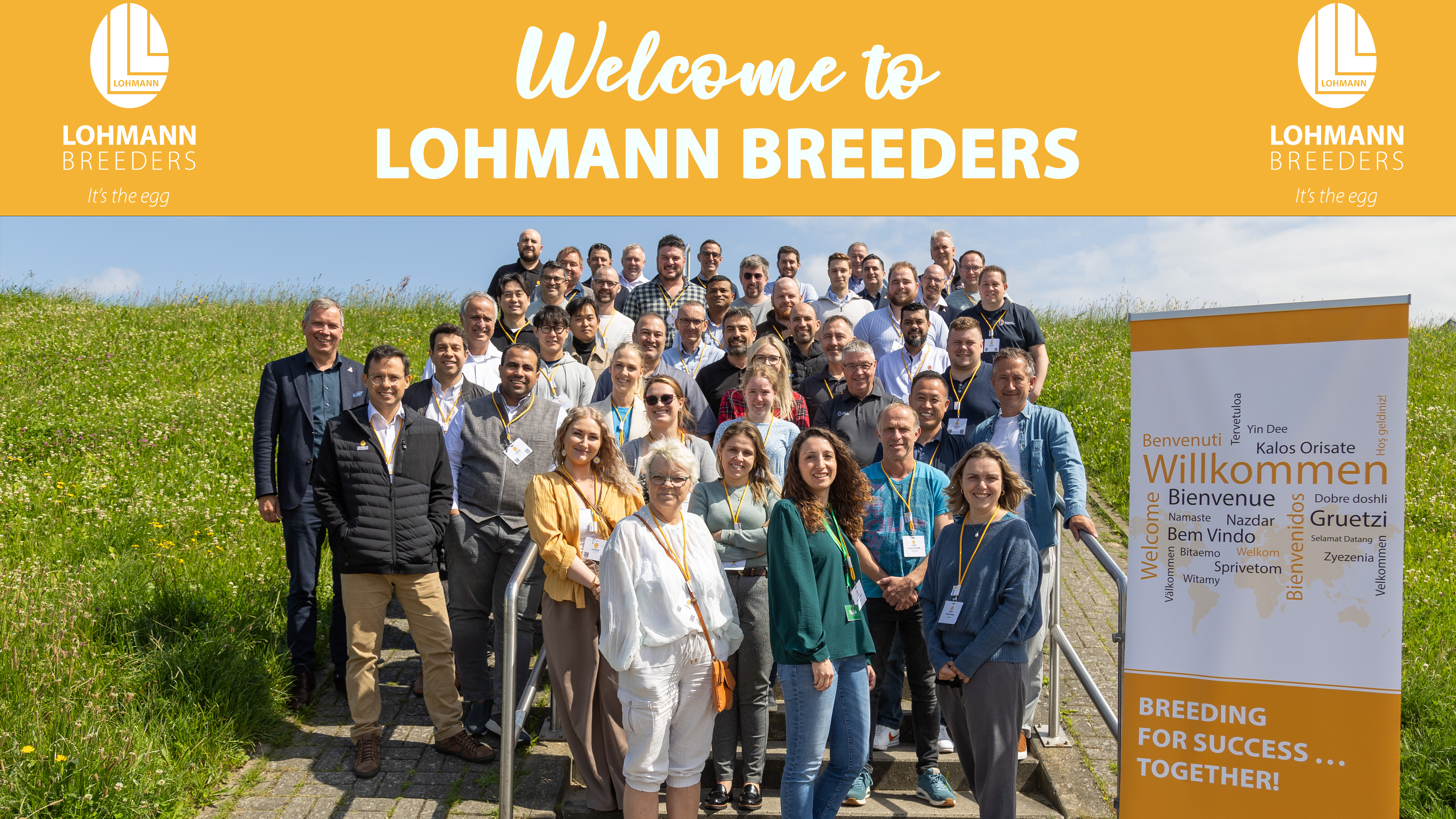
Since 47 years, LOHMANN INFORMATION has been a hub of valuable knowledge transfer. Reaching over 2,200 people subscribed to the journal’s mailing list and 34,000 articles accessed per year, LOHMANN INFORMATION offers a valuable platform for high quality applied science, cutting-edge and original research studies as well as review articles from well-known and trusted resources. This success would not have been possible without the dedicated scientific expertise of Prof. Dr. Dietmar Flock, who initiated the publication of LOHMANN INFORMATION and served as editor over several decades.
With the beginning of the New Year, we also announce a fresh breeze to the editorial team: Continuing the tradition of scientific integrity, we are delighted to welcome Prof. Dr. Isabelle Ruhnke following the footsteps of Prof. Dr. Werner Bessei as Editor-In-Chief. Prof. Ruhnke will continue to facilitate the communication of evidence-based scientific information to a broad global community. Prof. Dr. Ruhnke is the Head of the Poultry Division at the veterinary School of the Freie Universität Berlin in Germany. Prof. Ruhnke is especially passionate about improving health and performance in free-range laying hens. She graduated in Veterinary Medicine in Berlin and obtained her Dr.med.vet degree working at the Gastrointestinal Laboratory at Texas A&M University. She also obtained a PhD in feed processing for poultry at the Institute of Animal Nutrition at the Freie Universität Berlin and became a certified veterinarian in Animal Nutrition and Dietetics as well as in Poultry. For eight years, Prof. Ruhnke worked closely with poultry producers in Australia while being employed at the University of New England in Australia. She has published more than 75 peer-reviewed journal articles, successfully supervised more than 12 PhD students, is Editorial Board Member of the Journal “Poultry MDPI” and Associate Editor of the Journal “Animal Nutrition”.
The first article of this year will deal with split feeding in laying hens. A simple version of split feeding has been used in traditionally production systems where hens were fed whole grain and a concentrate a sequential program. This system has been further developed and is applied under practical conditions. Split feeding is considered to be more efficient with regard to feed conversion, health and welfare of chickens than conventional feeding using a single diet. There are still concerns on its use. The present article is intended to help laying hen owners decide whether they can use the system under their conditions.
In the next editions, the use of native poultry for food security, wealth creation and sustainable livelihoods will be revised, as well as new insights about the use of pre-and probiotics to prevent antibiotic resistant Enterobacteriaceae be shared.
Werner Bessei & Isabelle Ruhnke
Editors
