


In-ovo vaccination in the hatchery
Coarse spray in the hatchery or in the rearing farm
Gel application in the hatchery or in the rearing farm
Hatchery administration is generally preferred, as the vaccine is evenly distributed, the application is early in live, it stimulates natural preening behaviour for the intake of the vaccine and the process requires minimal handling.Via drinking water or spraying over feed in the rearing farm
Unlike many other vaccines, managing the immunity development is not over after proper administration. Post-vaccination management is critical, as the attenuated oocysts in the vaccine needs to be re-cycled, similar to a natural infection, to trigger a strong and lasting immune response.Both coarse spray and gel application methods are effective, provided the correct vaccine dose is applied6.
In practical terms, the sporulated oocyst must first infect the bird, replicate within the gut wall, and then be shed through the faeces, where they are picked up by other birds. Depending on the Eimeria species, 2 to 3 cycles (equivalent to 3 to 6 weeks) are typically needed for full immunity to develop7.
This article outlines five essential post-vaccination management points to consider, whether you receive already vaccinated chicks or apply the vaccine yourself in the poultry house.
Tools to estimate the onset of immunity: crop filling and OPG monitoring.
Crop filling?! Yes, really. While traditionally used to check whether chicks have found feed and water during the first 24 hours after placement, crop filling also correlates with key early performance indicators such as the number of non-starters, early skeleton and organ development and appetite formation8.Manufacturers of live attenuated coccidiosis vaccines emphasize that the sporulated oocysts in the vaccine are not immediately active upon administration.Nevertheless, a good start of chicks needs to be ensured to develop protective immunity, it is also necessary to secure the start of the cycles needed post-vaccination.
Post-hatch feed or other hatching supplements might already facilitate this process. Once ‘cracked’, it takes approximately 4 days for E. acervulina and up to 7 days for E. necatrix before first oocyst shedding occurs via the faeces.Instead, they must be mechanically ‘cracked’ open in the gizzard, filled with feed, before they become biologically active by releasing smaller eggs (sporocysts) and in the end infective parasites (sporozoites)9–11.
To ensure a strong and timely onset of immunity, crop filling assessment can be combined with OPG (oocysts per gram of faeces) monitoring.If cracking does not occur within 6 to 8 hours post-vaccination, the start of the cycle, and therefore the development of immunity, can be delayed.
Provided it is done correctly, OPG monitoring could offer valuable insight into the events following vaccination and the progress of immunity development. Together with crop filling assessment, these practical tools enable farmers to determine:OPG monitoring in a strict protocol of fresh faecal samples post-vaccination is a method to confirm vaccine replication within the flock, providing direct evidence that the first cycle of oocyst shedding has taken place12,13.
Whether cracking has taken place and the first cycle has been started
The expected timeframe for the onset of protective immunity
The extent to which the vaccine is recycling throughout the flock
Whether immunity is being effectively established
Manage your chick paper properly, to secure contact with faeces
In cage-free systems like aviaries, chicks typically have little to no contact with their own faeces during the first weeks of life because they are placed in pens in the system. However, this contact is essential to initiate oocyst recycling, which is required for building effective immunity after coccidiosis vaccination. To facilitate this as well as chick comfort, chick paper plays a critical role. The material should14:Be made of sturdy, hydrophobic material (e.g. cardboard > 250 g/m2 or plastic)
Keep faeces moist to support oocyst sporulation and viability
Cover at least 60 – 80% of the pen floor at placement
As chicks grow and are moved to other pens, though not yet fully accessing the entire system, move an equal amount of paper with them, aiming for at least 40% coverage of the new area.Ideally placed under the drinker lines, where humidity is higher. Only if nipples do not leak, as excess water can lead to wet chicks and health issues
Be sure to place the paper on the ground only once the birds have access to it, and not too far before, to prevent it from drying out.It is recommended to not remove any chick paper before 28 days post-vaccination, and at minimum, while birds remain in pens. When the pens are opened and the birds have access to the floor, the remaining chick paper can be put on the floor to allow further uptake of oocysts.
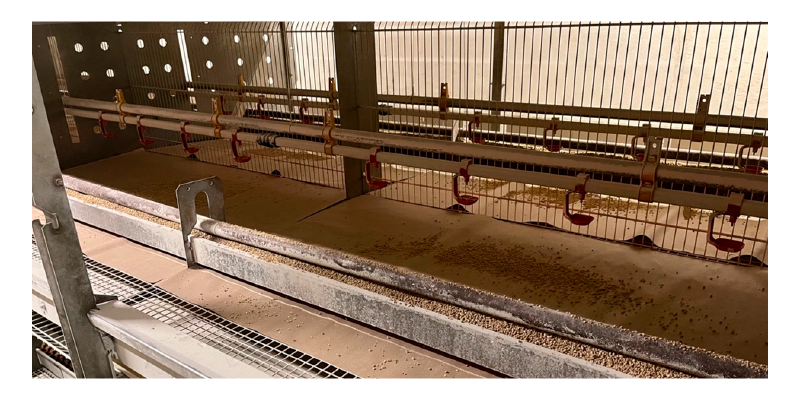
Picture 1: Example of a pen well-covered with chick paper, including starter feed
Additionally, if the birds are vaccinated by spraying in the hatchery, the paper used in the transport boxes should be placed in the pens as well (Picture 2).This ensures that all the sprayed vaccine that has not reached a chick, could still be available, and any uncracked oocysts from the vaccine that passed through the digestive tract during transport can still be cracked after excretion and contribute to immunity development.

Picture 2: Placement of transport papers to maximize vaccine efficacy and oocyst recycling
If, for any reason, the chick paper is already gone before the chicks have access to the whole system, move them to the floor as fast as possible. Or place new paper and manually apply fresh faeces collected from the manure belt to support continued oocyst intake.Humidity, temperature and oxygen enable sporulation, but freshness of feaces makes it effective
Once the vaccine has become effective and the first oocysts are shed (typically after 4 to 7 days post-vaccination), they are not yet infective. To become effective, oocysts must undergo sporulation, a process that depends on several environmental factors, most importantly temperature, humidity and oxygen. Recommended conditions for optimal sporulation include:Chick paper temperature between 24 – 28 °C
Humidity on the level of the chick paper of 30 – 40%
While these parameters are essential, a practical approach focuses on the freshness of the faeces. Ask yourself: Are the droppings on the paper still moist, or have they already dried out?Corresponding with an ambient air humidity of around 60 – 65%
Look at your papers in different pens and assess whether you think the oocysts can survive
To improve paper-level humidity, lightly sprinkle water using a watering can or backpack sprayer, or slightly increase nipple pressure to allow minimal dripping. Be cautious, since excessive moisture can lead to wet chicks, health issues and rupturing of the chick paper.In fresh faeces, oocyst can survive for up to 7 days, whether in dried faeces, they may die off within a few hours
A safer, more general approach is to raise overall air humidity by rinsing water on floors and walls, which indirectly benefits paper-level humidity.
Facilitate re-uptake through targeted chick behaviour
Once oocysts have been shed and successfully sporulated, the next critical step is their re-ingestion by the chicks to continue the immunity-building cycle. This re-uptake can be stimulated by encouraging natural pecking behaviour toward chick paper and fresh faeces. There are several practical strategies to support this:Distribute feed directly on the chick paper for the first 10 – 12 days, as can be seen in Picture 1. This not only ensures that chicks can easily find feed but also increases the chance of accidental ingestion of faeces containing sporulated oocysts.
Increase light intensity to make moist, shiny faeces more attractive for pecking and to stimulate preening behaviour, both of which promote oocyst intake.
Maintain a higher stocking density during the first 14 days of 30 – 60 birds per m2>/sup>. After 15 days, this can be reduced to 15 – 30 birds per m2. A higher density encourages more movement and interaction with the paper, increasing exposure to oocysts. Do not forget to relocate a proportional amount of chick paper when reducing the stocking density, ensuring at least 40% coverage in the new pen.
Safeguard gut health and avoid antibiotic interference
Maintaining gut integrity and gut health is essential for effective immunity development following coccidiosis vaccination. The replication of vaccine oocysts takes place in the intestinal epithelial cells (enterocytes), meaning that both gut health and integrity are critical for initiating the immune response. Various stressors can impair gut health, and as a result, hinder vaccine performance. These include:(Immunosuppressive) diseases
Mycotoxins
Cold or heat stress
Poor hygiene and biosecurity
Low-quality feed (e.g. >25% fines or nutritional imbalances)
Inadequate feeder or drinker space
 Any of these factors can damage gut cells, limit oocyst replication, and ultimately prevent the bird from building proper immunity. Moreover, stressed birds often reduce their feed and water intake, which directly lowers oocyst ingestion.
Medical treatments, like some antibiotics (sulphonamides, tetracyclines and spiramycin15) and anticoccidial drugs14, pose a direct risk to vaccine efficacy due to their coccidiostatic or coccidiocidal activity or immunosuppressive side effects16–18.
Any of these factors can damage gut cells, limit oocyst replication, and ultimately prevent the bird from building proper immunity. Moreover, stressed birds often reduce their feed and water intake, which directly lowers oocyst ingestion.
Medical treatments, like some antibiotics (sulphonamides, tetracyclines and spiramycin15) and anticoccidial drugs14, pose a direct risk to vaccine efficacy due to their coccidiostatic or coccidiocidal activity or immunosuppressive side effects16–18.
These drugs, as well as some water disinfectants (e.g. chlorine), may alter the cycle of the vaccine or kill the oocysts of the vaccine, effectively blocking the immunization process.
In conclusion, successful coccidiosis vaccination in cage-free systems depends not only on correct administration but also on careful post-vaccination management
Key points include ensuring early vaccine uptake and activation, supporting oocyst intake through proper chick-paper use, optimizing environmental control for sporulation, stimulating chick behaviour that facilitates re-ingestion of oocysts, safeguarding gut health and avoiding vaccine-interfering treatments
Together, these five key points provide poultry farmers with the foundation to build strong, long-lasting immunity and protect their flocks against future coccidiosis challenges!
References: See the PDF
