

Before we look at double-yolk eggs, here’s a quick look at how an egg forms:
Inside the hen’s ovary, a yolk is released and travels through the oviduct, where it is surrounded by albumen (egg white), membranes, and finally the shell.
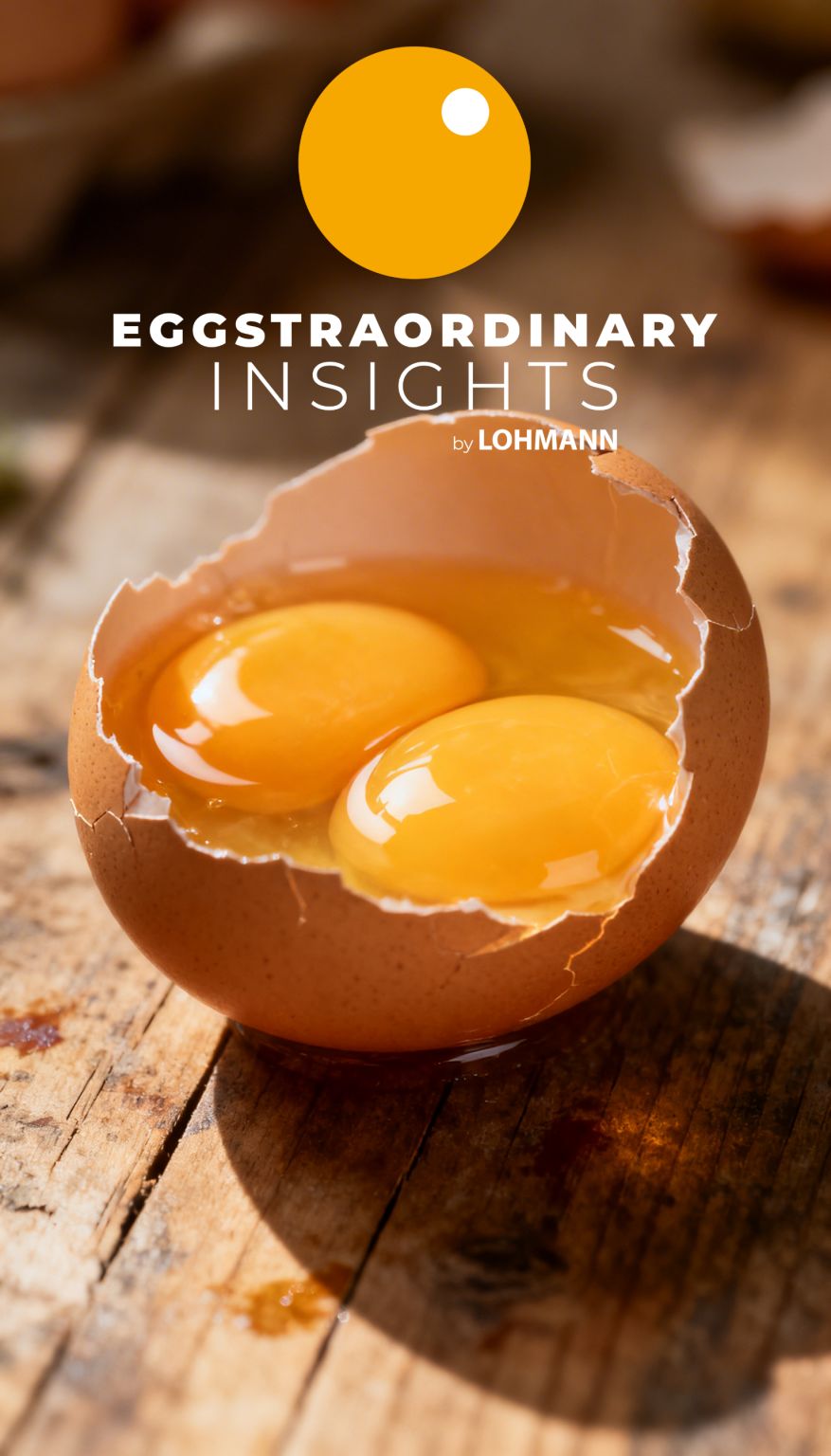
Normally, this process happens with one yolk at a time — but sometimes nature has other plans. Finding a double-yolk egg is a lucky surprise, and a glimpse into how amazing the hen’s biology is.
Here’s why it happens:
• Two yolks released at once: Young hens (especially early in lay) may release two yolks within a short time• Shared journey: Both yolks travel through the oviduct together and are enclosed in one shell
• Maturity: Double-yolk eggs are more common in young hens whose reproductive systems are still regulating
• Hormonal fluctuations: Stress, changes in light exposure, diet shifts, or environment can momentarily disrupt the hen’s normal egg‑laying cycle
• Perfectly safe: Double-yolk eggs are completely safe to eat and just as nutritious as single-yolk eggs
At LOHMANN BREEDERS, we breed for uniform egg size and stable laying performance, which naturally limits the frequency of double-yolk eggs — even though they can still occur occasionally.
💡 Tip: Double-yolk eggs are more common in young hens and in very large eggs..
LOHMANN BREEDERS – It’s the egg. 🥚💛
#EggstraordinaryInsights #DoubleYolk #EggScience #ItsTheEgg