

 Nutrition
-

Many unexplained issues, such as pale yolks, poor shells, lower egg numbers, wet droppings, variable feed intake, weak flock uniformity, and increased susceptibility to heat or disease, are often linked to oxidation in feed and oils.
What is Oxidation?
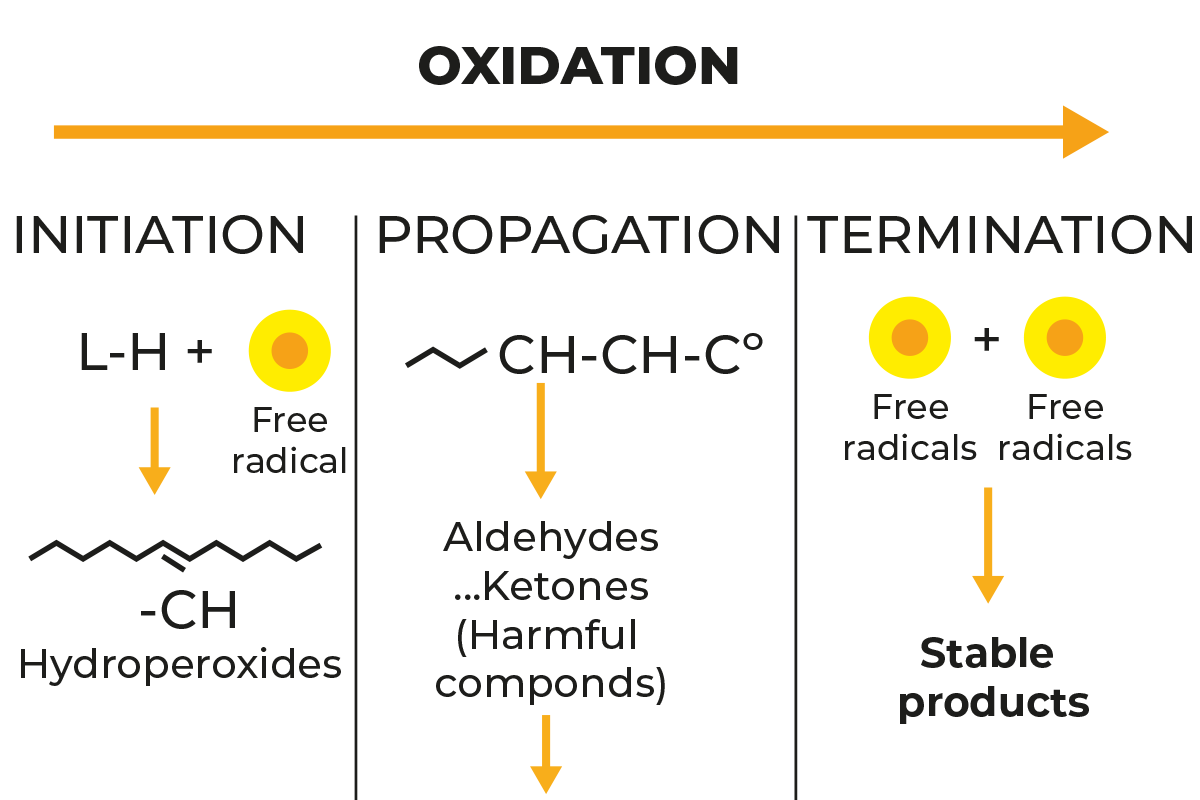
Oxidation is a chemical reaction in which oxygen attacks fats, oils, vitamins, proteins, and pigments (Frankel, 2005; Oke et al., 2024). When unsaturated fatty acids in oils react with oxygen, they form unstable molecules called hydroperoxides.These quickly break down into aldehydes, ketones, and other harmful compounds. This entire process is known as lipid peroxidation (Surai, 2002).
 In poultry nutrition, oxidation is especially important because oils and fats supply high energy and contain polyunsaturated fatty acids (PUFA), which spoil quickly.
-

Oxidation happens in three steps: initiation (formation of the first free radicals), propagation (rapid chain reaction that damages nutrients), and termination (final breakdown products). By the time the reaction reaches the termination stage, most damage has already occurred.
What Causes Oxidation in Feed and Oils?
Several factors are responsible for the initiation of lipid oxidation some are list below (Durand et al., 2024).1. High PUFA Content
Soybean oil, canola oil, fish oil, and poultry fat contain many double bonds that oxidize easily. The more PUFA present, the higher the risk.2. Heat, Light, and Humidity
High temperatures in feed mills, storage tanks, or farm bins speed up oxidation. Sunlight and UV exposure also break down fats rapidly. Humidity increases mold growth and enzyme activity that accelerates oxidation.3. Exposure to Oxygen/air
Open tanks, leaky valves, poorly sealed containers, and high surface area exposure allow oxygen to continuously enter, fuelling the reaction.4. Metals and Equipment Contamination
Iron and copper residues—from pipelines, tanks, pumps, and grinding equipment—are powerful catalysts that dramatically increase oxidation rates.5. Poor Quality or Recycled Oils
Used cooking oils, dark-colored oils, oils with high free fatty acids (FFA), or oils with impurities oxidize much faster and are unsafe for poultry.6. Enzymes in Grains
Certain grains (especially soybeans and wheat) contain natural lipoxygenase enzymes that start oxidation during storage or processing (Axelrod & Laakso, 1981; Mihaljevic, 1996).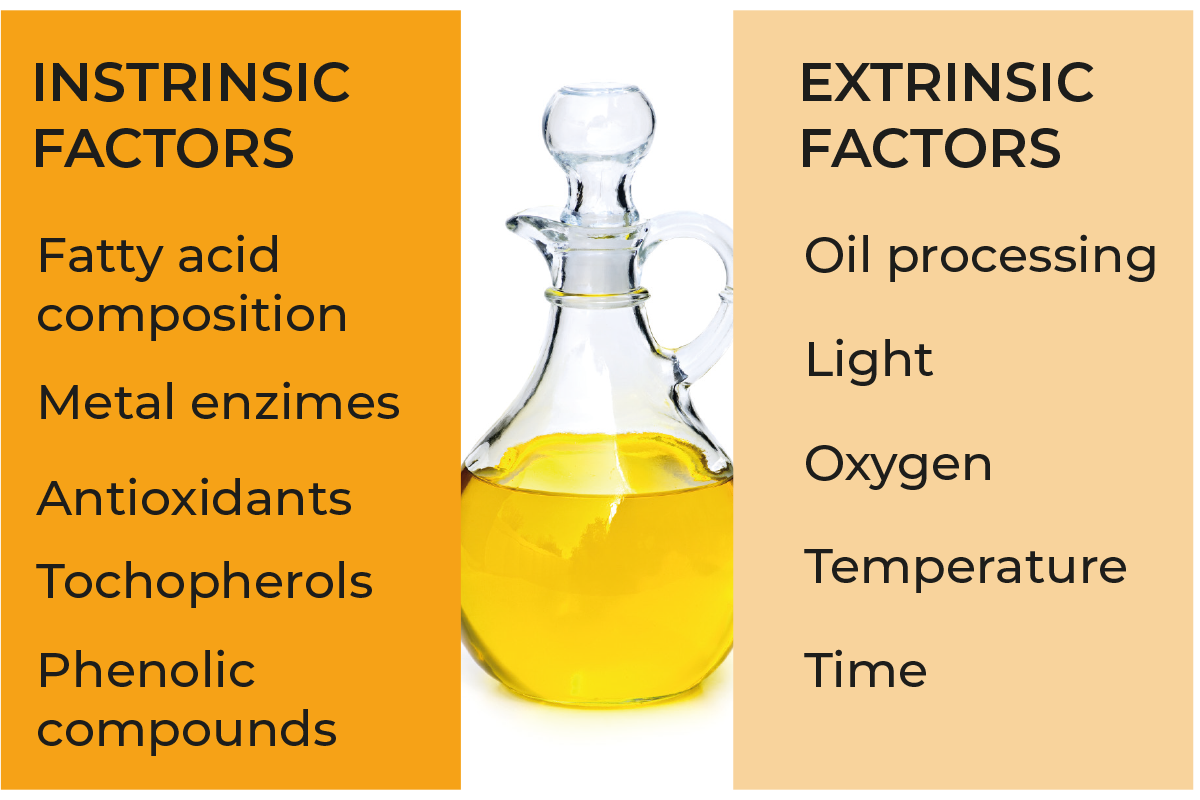
How to Identify Oxidized Materials (Practical Field Guide)
Farmers and feed millers can identify oxidized feed without lab equipment using simple sensory observations.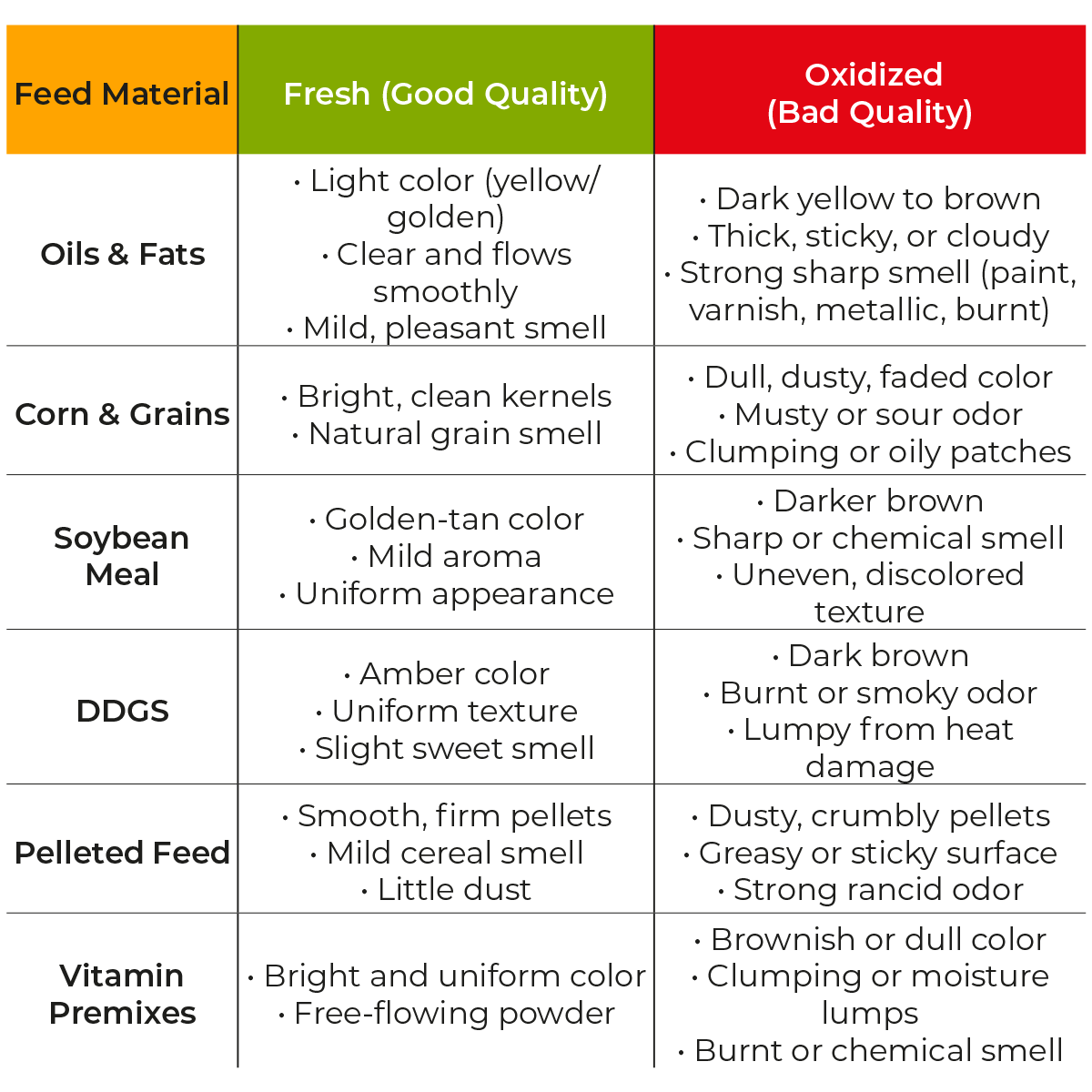
If something looks dark, smells sharp or sour, feels sticky, or forms lumps — it is likely oxidized and should NOT be used.
Why Oxidation Matters: Impact on Feed Quality and Nutrients
1. Loss of Energy
Oxidized oils lose approximately 8–15% (Baiao and Lara, 2005) of their metabolizable energy (ME). Layers eating oxidized oil consume more feed but gain less energy, reducing production efficiency.2. Vitamin Destruction
Fat-soluble vitamins (A, D3, E, K) degrade rapidly in oxidized feed. In severe cases, losses reach 80–100%. This weakens immunity, bone health, pigmentation, and shell quality.3. Loss of Carotenoids
Carotenoids responsible for yolk color degrade quickly, leading to pale yolks and poor pigmentation.4. Protein Damage
Heat and oxidation, ie.: DDGS or soybean meal, and pelleted feeds reduce amino acid digestibility and increase indigestible fractions.Impact of Oxidized Feed on Laying Hens
-

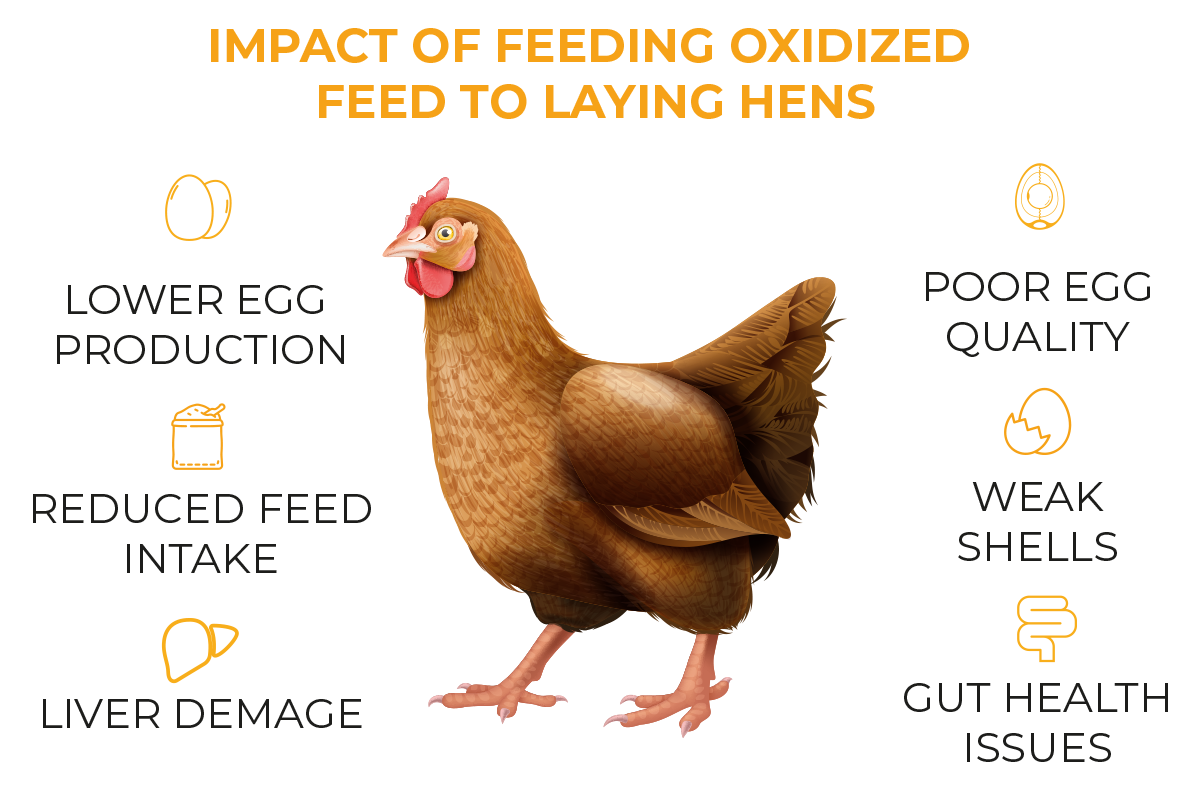
Reduced Feed Intake. Birds naturally avoid rancid odors. This may lead to compromised feed intake that alternatively could impact body weight gain, flock uniformity during rearing period.
-
Drop in Egg Production. Oxidized feed reduces laying rate by 2–8% due to reduced energy, damaged nutrients, and stress on the reproductive system (Yue et al., 2011, Saki at al., 2016; Oke et al., 2024).
-
Poor Egg Quality. Varastegani & Dahlan, 2014, Saki et al., 2016.
-

Lower egg weight
-
Pale yolks
-
Weak shells (10–15% reduction)
-
Faster yolk rancidity during storage
-
Liver Stress. The liver must detoxify aldehydes and peroxides, leading to fatty liver changes, reduced metabolism, and increased mortality risk (Zhou et al., 2020; Oke et al., 2024).
-
Increased Oxidative Stress. Markers such as malondialdehyde (MDA) and TBARS increase, while natural antioxidant enzymes decrease. Birds become more vulnerable to heat stress, disease, and mycotoxins (Oke et al., 2024; Petcu et al., 2023).
How Feed Mills Can Measure Oxidation
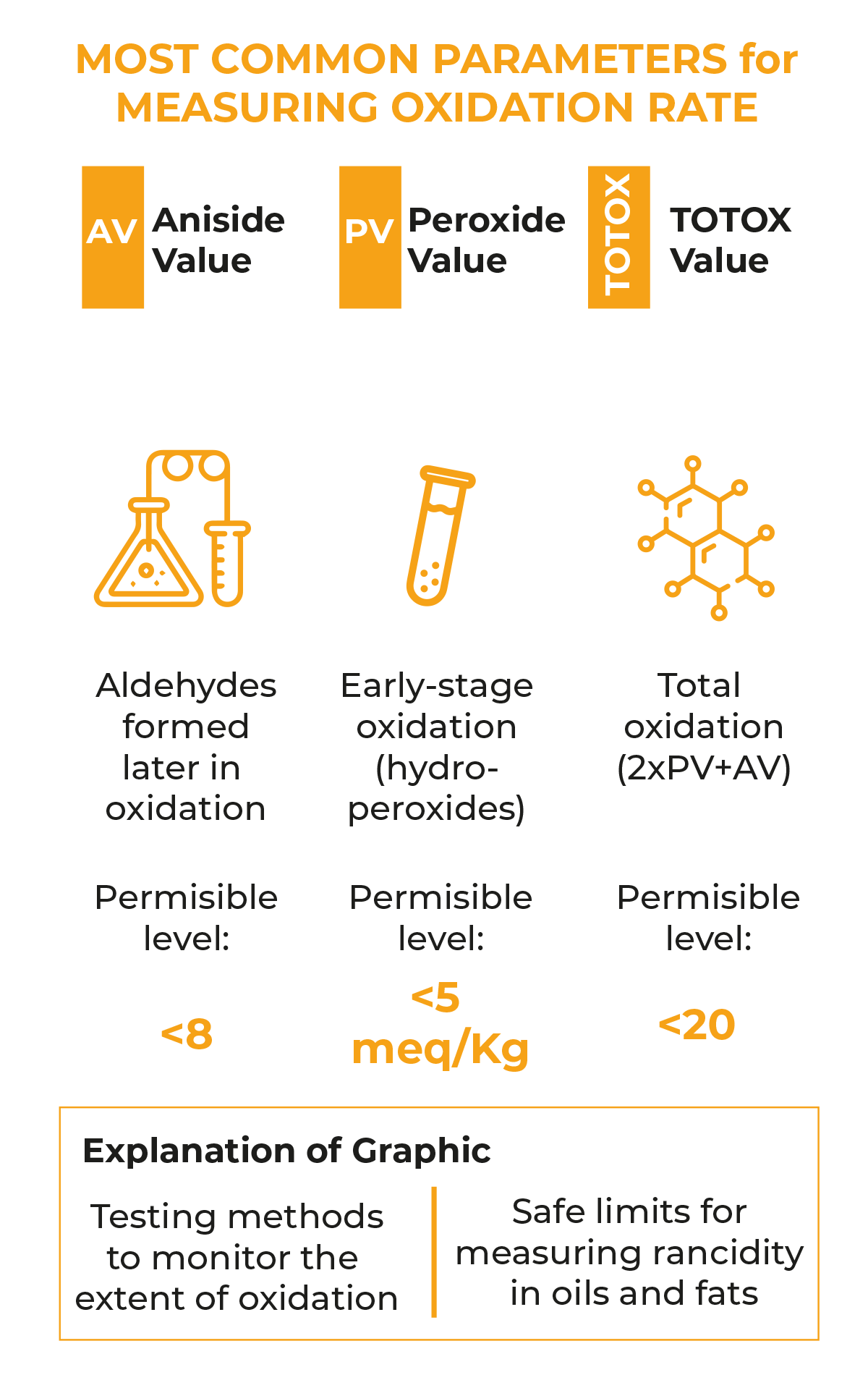
There are a number of analytical methods available in the industry to measure the extent of oxidation in fat/oils and other ingredients (Abeyrathne & Ahn 2021; Kemin Industries, 2022)-
1. Peroxide Value (PV). Indicates early-stage oxidation (hydroperoxides). Recommended: < 5 meq/kg
-
2. p-Anisidine Value (AV). Measures aldehydes formed in the later stage.
-
3. TOTOX Value. Total oxidation (TOTOX = 2 × PV + AV). A good overall indicator of spoilage.
-
4. TBARS. Measures MDA, useful for assessing oxidation in finished feed or tissues.
-
5. OSI/Rancimat. Used to determine the stability and shelf-life of oils. Routine testing helps prevent field problems before they affect flocks.
Using Antioxidants in Oils and Feed
How Antioxidants Work
Antioxidants protect oils and feeds by:-

Neutralizing free radicals
-
Stabilizing hydroperoxides
-
Protecting vitamins and pigments
-
Maintaining ME value
Types of Antioxidants
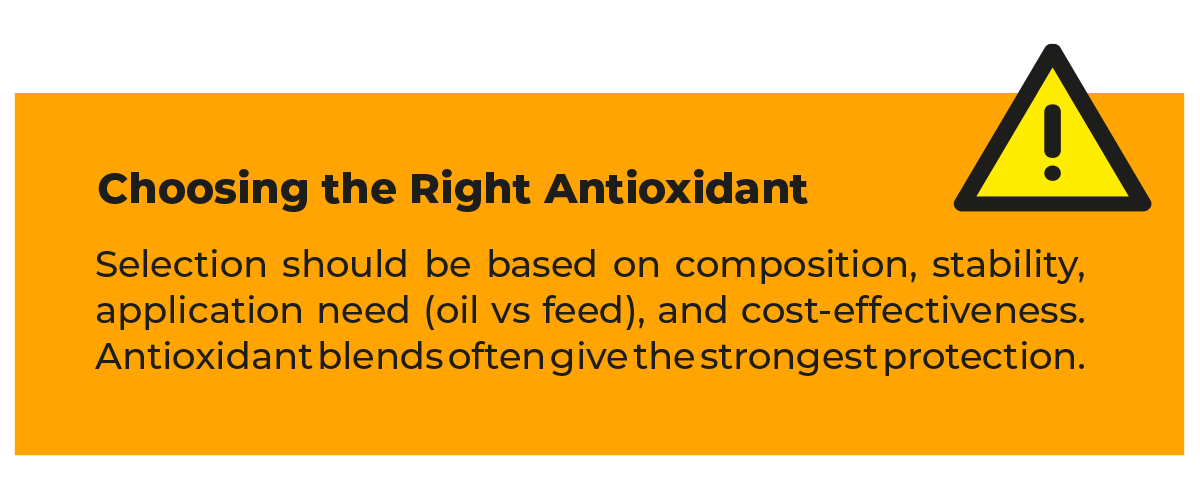
Synthetic Antioxidants
-

BHT
-
BHA
-
TBHQ
-
Ethoxyquin
Natural Antioxidants
-

Tocopherols
-
Rosemary extract
-
Green tea extracts
-
Ascorbyl palmitate
Conclusion
-
Oxidation is one of the most important—and preventable—factors affecting feed quality and layer performance.
-
It reduces nutrient value, destroys vitamins, lowers ME, harms egg production and egg quality, and causes oxidative stress and liver damage in hens.
-
By identifying oxidation early, applying correct handling and storage practices, and using the right antioxidant solutions, feed mills and farmers can protect feed quality, improve flock health, maintain consistent egg numbers, and enhance profitability.
-
Controlling oxidation is a simple, cost-effective strategy that supports strong, sustained performance in modern layer operations.
Bibliography
Abeyrathne, E. D. N. S., Nam, K., & Ahn, D. U. (2021). Analytical methods for lipid oxidation and antioxidant capacity in foods and biological systems. Antioxidants, 10(10), 1583. Axelrod, B., Cheesbrough, T. M., & Laakso, S. (1981). Lipoxygenase from soybean. Methods in Enzymology, 71, 441–451. Baião, N. C., & Lara, L. J. C. (2005). Oil and fat in broiler nutrition. Revista Brasileira de Ciência Avícola, 7(3), 129-141. Durand, E., et al. (2024). Navigating the complexity of lipid oxidation and antioxidation: A review of evaluation methods and emerging approaches. Progress in Lipid Research 97 (2025) 101317. Frankel, E. N. (2005). Lipid Oxidation. Woodhead Publishing. Kemin Industries. (2022). Guidelines on oil quality, oxidation control, and antioxidant use in animal feed. Technical Bulletin. Mihaljevic, B., et al. (1996). Wheat lipoxygenase: occurrence, properties, and role in breadmaking and food oxidation. Cereal Chemistry, 73(6), 523–527. Oke, O. E., et al. (2024). Oxidative stress in poultry. Poultry Science, 103(1), 102290. Saki et al., 2016. Effects of various levels of oxidized oil on performance, egg quality, and blood metabolites in laying hens. Poultry Science Journal, 4(1), 13–18. Surai, P. F. (2002). Natural Antioxidants in Avian Nutrition and Reproduction. Nottingham University Press. Varastegani, A., & Dahlan, I. (2014). The effects of dietary oxidized lipids on egg quality and laying hen performance. Asian Journal of Animal and Veterinary Advances, 9(6) 450 – 454. Yue , J. Wang , X. L. Qi , F. Ji , M. F. Liu , S. G. Wu , H. J. Zhang , and G. H. Qi. (2011). Effects of dietary oxidized oil on laying performance, lipid metabolism, and apolipoprotein gene expression in laying hens. 2011 Poultry Science 90 :1728–1736.