



The LOHMANN Field Data Fertility Analysis 2026 confirms long-term performance
At LOHMANN, performance analysis are not based on assumptions but on systematically collected and carefully analysed production data. With the LOHMANN Field Data Fertility Analysis 2026, LOHMANN evaluated its own comprehensive field data from commercial hatcheries over a twelve month period in Europe in order to objectively assess real genetic performance under practical field conditions and compare it with competitor genetics.The results provide clear and robust insights into fertility, hatchability and biological stability of LOHMANN lines throughout the entire production cycle.
Stable fertility throughout the entire produciton cycle
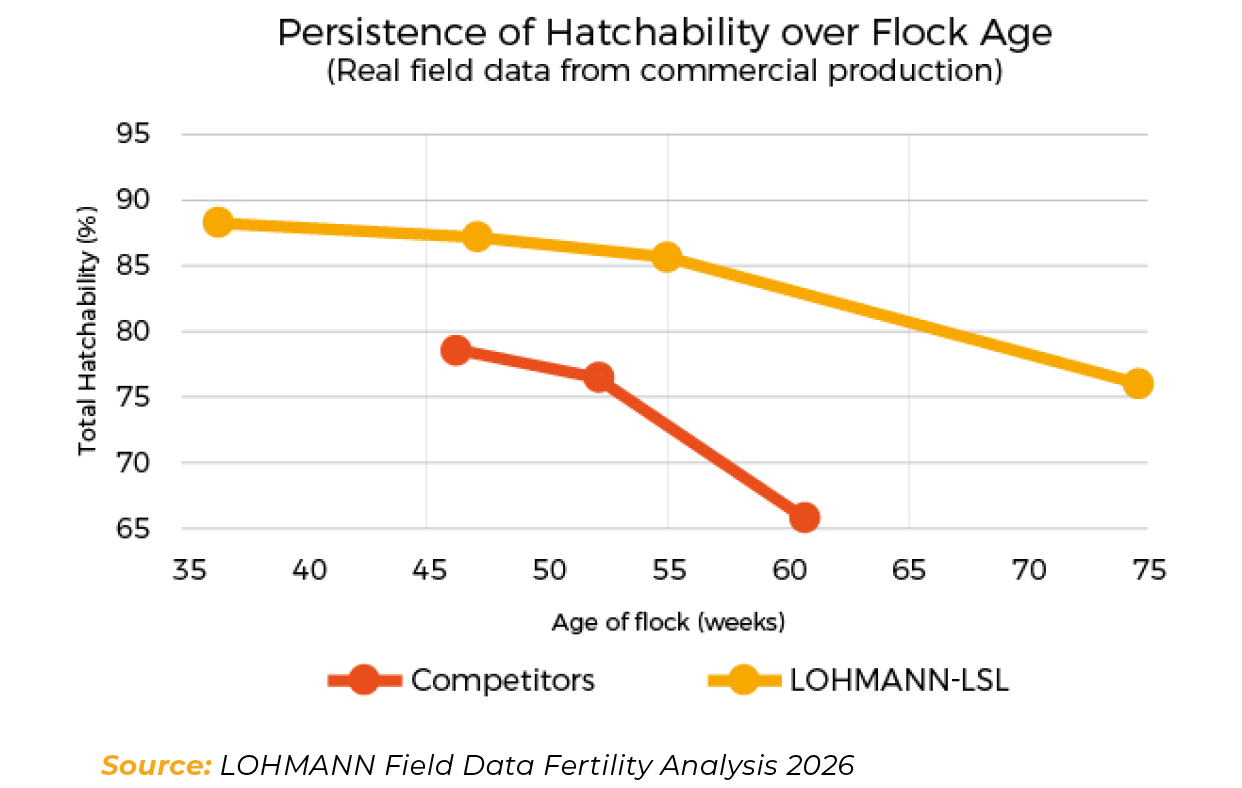
One of the key findings of LOHMANN’s internal analysis is the exceptional persistence of fertility in LOHMANN-LSL and LOHMANN-BROWN. While many competing lines show a pronounced decline in fertility as flock age increases, LOHMANN maintains stable fertility levels well beyond 68 to 75 weeks of age.The results provide clear and robust insights into fertility, hatchability and biological stability of LOHMANN lines throughout the entire production cycle.
This is the result of focused breeding work alongside proper management and represents a decisive advantage for operations relying on planning security and sustainable performance.
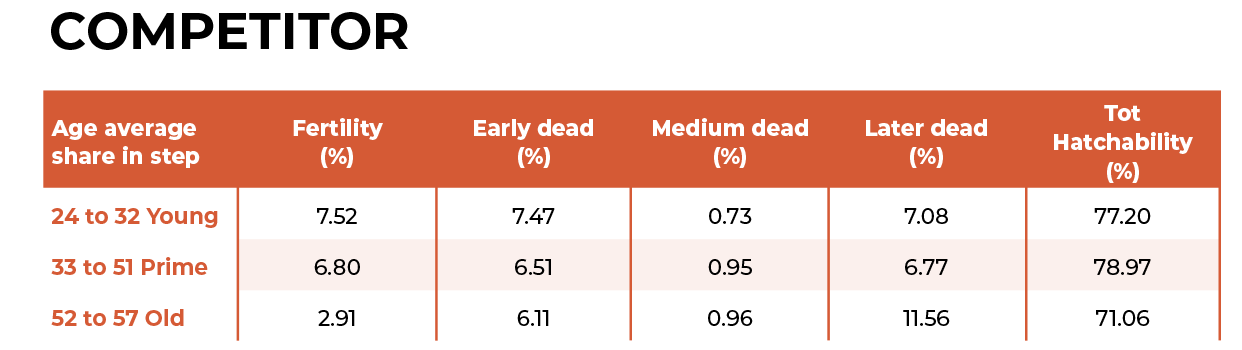
Early candling and hatchability comparison
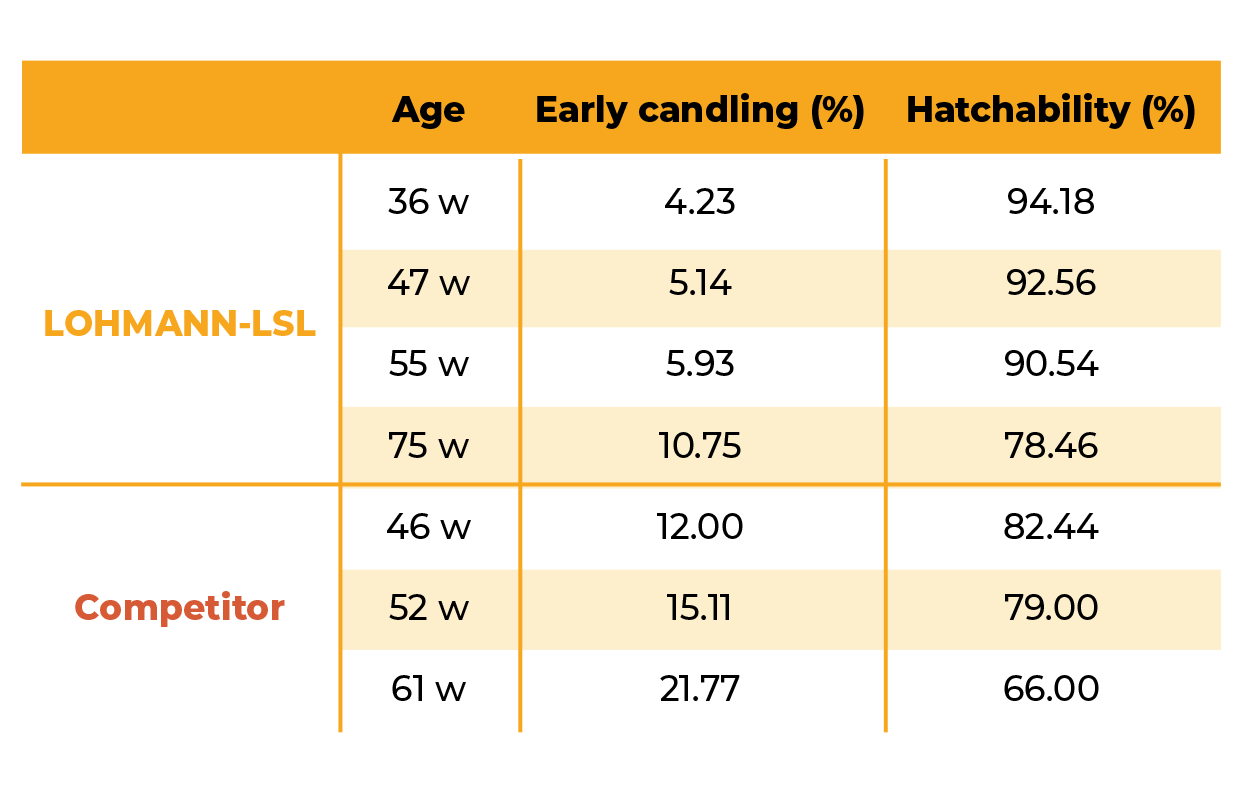
 Clear performance decline in Competitor with increasing age.High persistence and stability of LOHMANN-LSL up to advanced flock age.
Superior hatchability under real production conditions
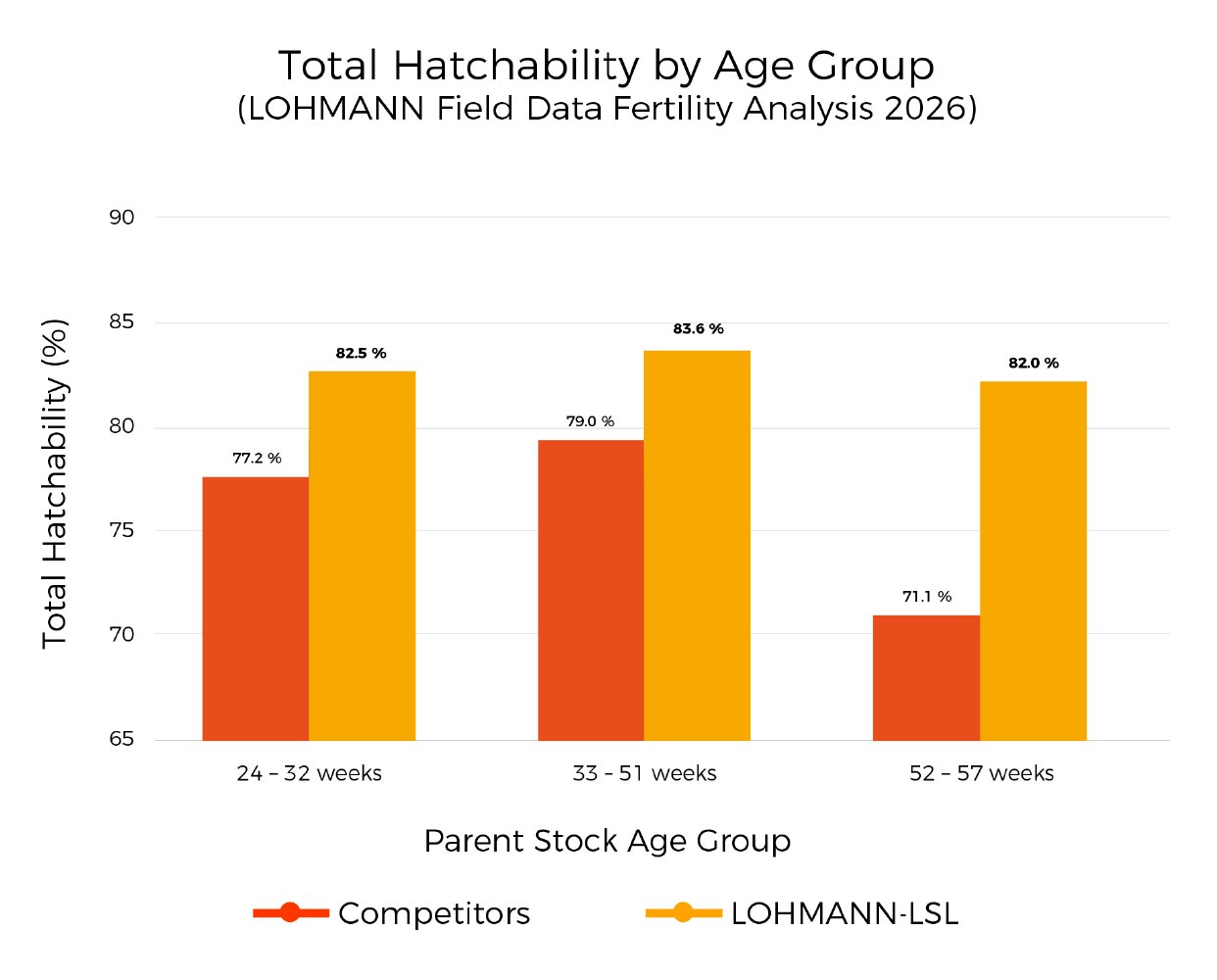
The comprehensive evaluation further demonstrates that LOHMANN lines consistently achieve higher total hatchability rates compared with competitor products.Crucially, the data were collected under identical practical conditions, including different flock ages and extended egg storage periods.
These results confirm that LOHMANN performs not only under optimal conditions, but delivers consistently strong outcomes in everyday commercial production.
Lower performance decline with increasing flock age
LOHMANN’s own data analysis highlights a clear difference:Where competitors often experience a sharp decline in fertility and hatchability accompanied by increasing losses in older flocks, LOHMANN shows significantly less performance drop.This stability is based on:

Stable hatchability higher output
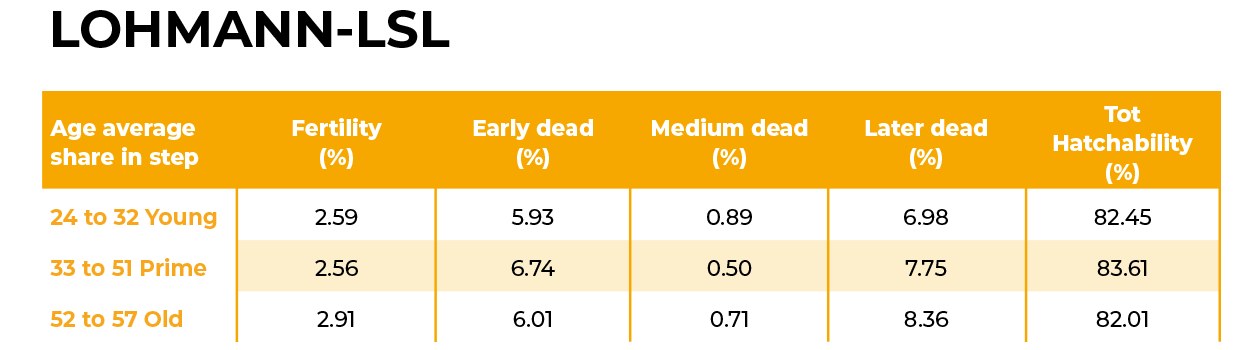
LOHMANN-BROWN achieves higher and significantly more stable total hatchability acrosss all age groups.In competitors, a pronunced decline in hatchability is particularly evident in older flocks.
The chart clearly highlights the economic advantage of LOHMANN through a higher number of marketable chicks per Parent Stock.
More marketable chicks per Parent Stock
Biological stability translates directly into economic advantage
The combination of consistent fertility, low embryonic losses and stable hatchability means that LOHMANN parent stock produces a higher number of marketable chicks per production cycle.For hatcheries, this results in:

A proven solution for non-integrated hatcheries
A particularly strong signal comes from the field itself:Many nonintegrated commercial hatcheries have deliberately chosen – or returned – to LOHMANN genetics after thorough evaluation and comparison.Their decisions are driven not by single parameters, but by:
Consistent performance over the entire production lifespan.High predictability of results.Reduced biological risk in daily operations.About the LOHMANN Field Data Fertility Analysis 2026
Biological stability translates directly into economic advantage
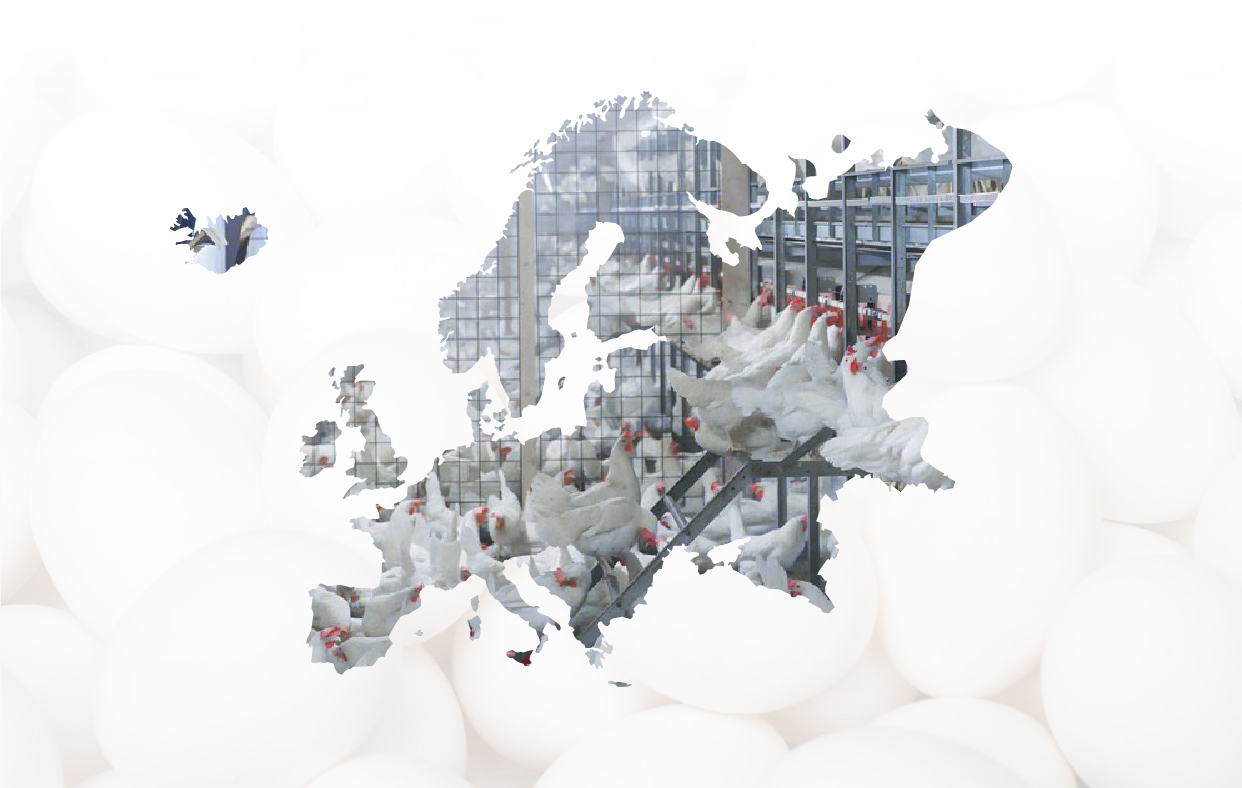
All results presented in the LOHMANN Field Data Fertility Analysis 2026 are based on production data collected directly by LOHMANN in Europe between January and December 2025:The analysis reflects true field conditions in commercial hatcheries, including real flocks, practical egg storage durations and complete production cycles.
It is not based on laboratory or experimental trials, but on a meticulously conducted field evaluation, providing high relevance and reliability for commercial practice.
CONCLUSION
The LOHMANN Field Data Fertility Analysis 2026 clearly demonstrates:LOHMANN stands for sustainable fertility, stable hatchability and longterm economic security – proven by LOHMANN’s own carefully collected and analysed field data.
